


How to Prevent Compressor Oil Carryover into the Truck Brake System
In the heavy commercial vehicle sector, safe and uninterrupted international logistics, intercity haulage, excavation and heavy-tonnage transport depend not only on flawless engine and mechanical systems but also on the vital safety of the air brake system. On trucks and tractor units, brake application, gear shifting, clutch control, air suspension bellows inflation, cab suspension balancing and the operation of auxiliary braking equipment all rely on the high-pressure air system. The heart of this vast pneumatic network is the air compressor, which runs continuously, driven from the engine block. However, because of heavy operating conditions, neglected maintenance, poor-quality oil and mechanical wear, compressors can start burning oil over time. When the oil burned by the compressor mixes into the air lines and is pumped into the brake system, air dryer cartridges, EBS modulators and emergency valves, it becomes a dangerous chronic fault that causes brake failure, frozen valves, tyre blowouts and traffic accidents with severe material and human consequences on tractor-trailers.
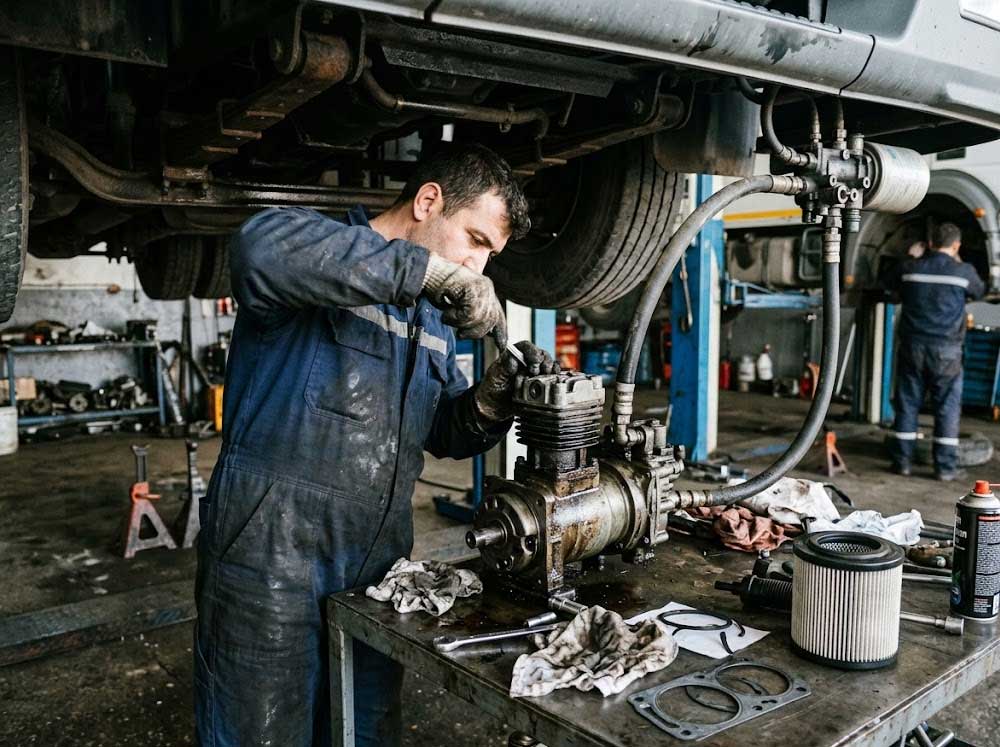
How the Air Compressor Works and Its Critical Role in the Pneumatic System
On heavy vehicles, the air compressor is a mechanical pump that is usually driven from the engine gear train or a belt-and-pulley mechanism, is lubricated by engine oil, and compresses atmospheric air to high pressure levels (generally in the 10-12 bar range) through piston movement in the cylinder. Before the compressed air reaches the vehicle's main air tanks, the compressor sends it to the air dryer unit (APU). The dryer filters moisture and oil vapour out of the air and distributes dry air to the system. However, when excessive wear develops inside the compressor, it does not only deliver air; the engine oil, thinned by heat, is blown directly into the air outlet line. This oil leakage, at a density the dryer filters cannot hold back, seeps into the entire pneumatic circuit and starts to cripple the brake system. The high thermal cycles generated during compression are among the biggest factors directly affecting the life of the sealing elements inside the compressor. In modern heavy vehicle architectures, electronically controlled brake systems (EBS) and advanced pneumatic valve blocks are extremely sensitive to even the slightest oil contamination, so the purity of the air produced by the compressor directly determines the stopping ability of the whole vehicle.
Why Does the Compressor Burn Oil and Pump It into the Air System? Main Causes of Failure
The main technical factors and mechanical wear processes behind an air compressor leaking oil and pumping it into the brake system on heavy commercial vehicles form an extremely complex chain. Over hundreds of thousands of kilometres, the compressor piston rings wear and cut grooves into the cylinder wall. Oil leaking through this gap rises above the piston, much as it does in a combustion chamber, and is expelled with the compressed air during the delivery stroke. Turbo oil leakage and intake line blockage are also major factors. A clogged intake pipe or air filter on the compressor makes the compressor pull a vacuum, and this vacuum draws oil vapour from the crankcase in through the intake port and straight into the air line. Blockage of the crankcase oil return holes by carbon or sludge prevents oil collected in the housing from draining out, and the oil seeps under pressure between the valve surfaces into the air passage, making the problem worse. Excessive engine oil pressure or the use of poor-quality oil are other critical factors that trigger oil leaks at the compressor seals and bearings. When the viscosity of engine oil falls below the manufacturer's standards, it increases the oil's evaporation rate at high temperatures and makes it easier for oil to leak into the cylinders through the compressor intake lines.
Dangerous Signs and Symptoms of Oil in the Brake System
When the oil pumped by the compressor begins to accumulate in the air tanks, valves and brake chambers, dangerous fault symptoms that threaten driving safety appear on the vehicle. Oil leaking past the brake valves travels through the air lines to the bellows and brake chambers and contaminates the brake linings; this lengthens the braking distance dangerously and makes the vehicle pull left or right under braking. The air dryer cartridge, which normally lasts a long time, becomes saturated within a few weeks because of heavy compressor oil, loses its function, and the filter bursts or black oil runs out of the water drain hole. When the plastic seals inside EBS and ABS modulators, parking brake release valves and emergency valves come into contact with oil, they swell and rot; the valves stick, causing the brakes not to release or to leak air. Lines clogged by heavy oil contamination make the system build up air pressure late, and low-pressure warnings start to light up on the digital display. Drivers may notice at this stage that the compressor has failed only late; however, a stiffening brake pedal, late release of the emergency bellows or abnormal operating noises from the valves are the clearest indicators that the system needs urgent maintenance.
Preventing Compressor Oil Burning and Professional Solution Steps
To eliminate the compressor's oil-pumping problem, draining the air tanks temporarily or replacing the dryer never offers a permanent solution. For a thorough repair, the compressor must be removed and the cylinder liner, piston, ring set and cylinder head valves must be inspected. Worn compressors should be overhauled with original repair kits or replaced with a new compressor to original equipment standards. Replacing the compressor alone is not enough; the engine oil that has been pumped into the system requires all air tanks to be removed and washed with special chemical solvents, and the lines to be completely purged with compressed air. Lines that are not cleaned will soon ruin the newly installed compressor and valves as well. In addition, the air dryer filter, drain valves and any suspect pneumatic valves whose structure has been damaged by oil exposure must be replaced with new ones. During service, subjecting the entire system to a pressure test and making sure the residues in the lines are completely cleared is the most critical engineering rule to follow so that the fault does not recur.
Safe Pneumatic Maintenance Discipline in Fleets and Mesay Otomotiv Solutions
Oil in the brake system is a very serious fault in heavy vehicle operations, directly threatening drivers' lives and legal roadside inspections. To prevent this risk in fleets, engine oil change intervals must be strictly observed, and air dryer cartridges must be renewed at regular intervals appropriate to the season and mileage. In compressor overhauls, original parts with the highest metallurgical durability should be preferred over cheap aftermarket ring and piston kits. Pneumatic line cleaning and dryer replacement should be adopted as a standard procedure in fleet maintenance planning.
With our decades of technical experience and strong stock infrastructure in heavy commercial vehicle gearboxes, differentials, engines and drivetrain components, we supply the sector with original air compressors, compressor repair kits and pneumatic system components for all heavy vehicle groups such as MAN, Mercedes-Benz, Scania, Volvo, Ford Cargo, Iveco and Renault. To keep your fleet's braking safety at the highest level, eliminate the risk of breakdowns on the road and extend the life of pneumatic systems, we continue to be your most reliable business partner with our wide product range and fast logistics network.
