


My Truck Heater Isn't Working, What Could Be the Reason? 5 Most Common Winter Malfunctions
In the world of heavy commercial vehicles, the winter season does not only mean icy roads and the obligation to use chains. For a truck driver, winter is a tough test of the hours, sometimes days, that they have to live inside the cabin. The cabin is both the driver’s home, office, and resting area. Therefore, a malfunctioning heating system is not just a comfort issue, but also a serious safety risk that increases driver fatigue and causes distraction.
As Mesay Automotive, we have been at the center of the heavy-duty spare parts industry for over 55 years. The parts we ship from our warehouses in Ankara, Istanbul, and Izmir to all over Turkey, and the feedback we receive from the field have taught us this: When it comes to heater failures, the first part that comes to mind may not always be the culprit. The problem experienced last year by a logistics company based in Erzurum is the best example of this. Despite newly installed heater cores, the vehicles would not heat up. Upon our inspection, we found that the issue was not with the cores, but with the chemical sludge caused by the incorrectly used antifreeze mixture.
In this comprehensive guide, we will detail why a truck may not heat up in winter, with real cases from the field and notes from our technical service manager.
Thermostat Failure: The Engine Cannot Reach Ideal Temperature
Due to their massive block structures, heavy-duty engines must maintain their operating temperature. For the heater to provide warmth, the engine coolant must first reach approximately 80-90°C. The thermostat is the most critical component that establishes this temperature balance.
• Field Experience: A Thermostat Case on the Roads of Sivas
In the winter of 2023, a Scania user operating on the Sivas-Kangal line came to our shop complaining, "My heater works well on flat roads, but it blows ice cold when going downhill." The vehicle’s temperature gauge dropped below 50°C when going downhill. The mechanic’s diagnosis was clear: The thermostat was stuck in the open position.
When the thermostat remains open, the engine coolant continuously circulates through the radiator and cools down under the effect of the freezing wind outside. Since the engine cannot warm up, the water going to the heater core also remains cold. This situation not only creates a heating problem; it also prevents DPF (Diesel Particulate Filter) regeneration in Euro 6 engines and causes a 15% increase in fuel consumption.
Heater Core (Heat Exchanger) Blockage and Antifreeze Mixture
The most common return or complaint we encounter concerns heater cores. When we cut open the cores returned to us as "defective parts" at our technical center, the scene we encounter is usually the same: limescale and sludge accumulation.
• Chemical Reaction: The Battle of Blue and Red Antifreeze
Many fleet managers top up missing antifreeze with whichever color they have on hand at that moment. However, mixing Organic (OAT) and Inorganic (IAT) antifreezes causes precipitation within the cooling system. This precipitation forms a gel-like sludge that clogs the heater core, which has the narrowest channels in the system.
In a case we encountered in Ankara Ostim industrial zone, we saw that while the inlet hose of the core was burning hot, the outlet hose was cold. Water could not circulate inside the core. When we removed the core, we saw that the channels were completely blocked with limescale. Using tap water during summer causes this limescale to detach when antifreeze is added in winter, filling the core pores.
Mesay Recommendation: If the heater core is clogged, replacing it with OEM-quality products such as Mahle and Behr is the most certain solution instead of cleaning it with chemicals. Cleaning chemicals may pierce the thin walls of the core and cause antifreeze leakage into the cabin.
Cabin Filter and Airflow Problems
Sometimes technically everything is perfect; engine temperature is 85°C, core hoses are hot... However, the airflow from the vents is so weak that it is not enough to heat the cabin. The culprit here is usually the most neglected part: the cabin (pollen) filter.
• Filter Lifespan in Construction Site Conditions
We observed a situation in excavation trucks working at Istanbul’s third airport construction site. The filters were exposed to so much dust that even though the ventilation motor (fan) was running at maximum speed, no air was entering the cabin. Drivers came to our shop thinking the heater motor was faulty.
When we removed the filter, we saw a layer of soil as thick as a finger had formed on it. When the filter is clogged, no matter how hot the heater core is, there can be no air circulation to carry that heat into the cabin. Additionally, a clogged filter can cause the ventilation motor windings to overheat and burn out.
Heater Valve and Flap (Direction) Motors
In modern trucks (Mercedes Actros, Scania R Series, Volvo FH, etc.), old-style cable controls have been replaced by electronic control units and small electric motors (actuators). These small motors that direct air to the feet, face, or windshield and adjust the temperature can sometimes become mechanically stuck.
• Detection of Digital Faults
A customer in Izmir complained that the right side of his truck was blowing warm while the left side was blowing ice cold. Many thought half of the core was clogged. However, upon inspection, it was found that the plastic gear of the left-side air direction flap had broken.
Especially in winter, plastic parts inside the cabin become more fragile due to the cold. Forcing the temperature setting from the panel or excessive dust accumulation can cause these small motors to burn out. If you hear a "click click" sound when changing the temperature setting on your vehicle’s panel, it means the flap motor gear is slipping.
Water Pump and Pressure Losses
For the truck heater system to function properly, water must circulate through the system under a certain pressure. The main component that provides this pressure is the water pump.
• A Slowly Progressing Pump Failure
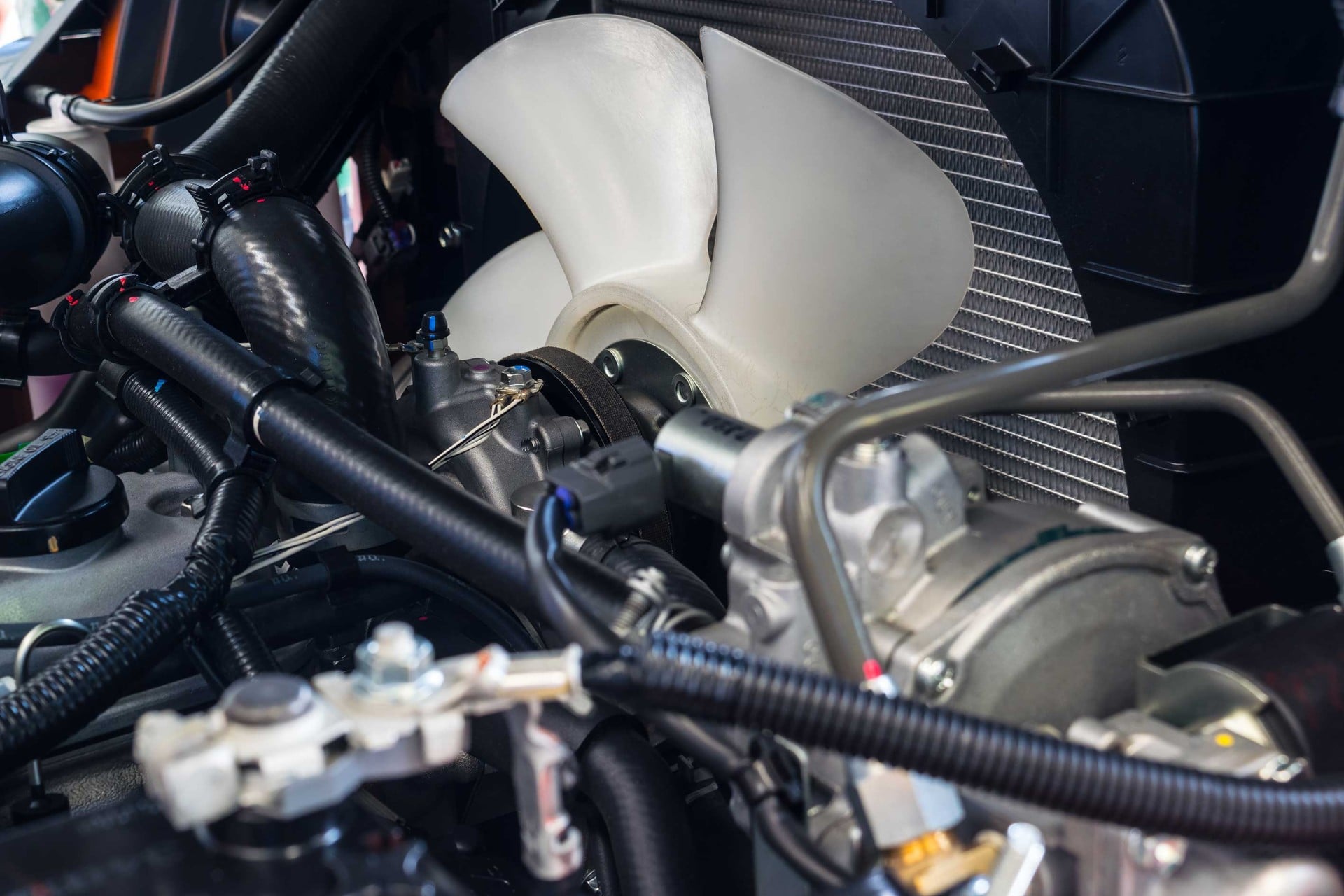
In high-mileage vehicles, the impellers of the water pump may wear out due to corrosion. Although the pump circulates water inside the engine, it cannot produce sufficient flow to push water to the heater core located at that distant and elevated point inside the cabin.
"If your vehicle blows cold at idle but heats up when you press the accelerator, your water pump has lost efficiency. Additionally, a tiny crack in the expansion tank cap can cause the system to lose pressure and draw in air. Where there is air, hot water does not circulate, therefore the heater does not warm."
Last winter at Ankara Logistics Base, this was exactly the situation we encountered in a vehicle. The driver had replaced the core, thermostat, and water pump but still could not get heat. The problem was the 50-lira expansion tank cap. Since the cap was leaking pressure, the system was constantly drawing in air and the core was freezing.
Diagnostic Steps for Heater Failure: What Can You Do Yourself?
If you are on the road and your heater is not working, checking the following steps before going to a professional service may save you from major expenses:
1. Check the Temperature Gauge: Is the needle steady between 80-90°C? If it is low, focus on the thermostat.
2. Touch the Heater Hoses: Are both hoses entering the cabin hot? If the inlet is hot and the outlet is cold, the core is clogged.
3. Test the Airflow: If you hear the fan but cannot feel air, try removing the cabin filter.
4. Check the Water Level: If water is missing, the system will draw in air. A heater core with air will not warm.
5. Check the Cap: Do you hear a "hiss" sound of air leaking from the expansion tank cap? If so, there is pressure loss.
Why Mesay Automotive? The Assurance of 55 Years of Experience
Selling spare parts is not just taking a box from the shelf and handing it to the customer. Recommending the right part for the right failure requires expertise. As Mesay Automotive, with more than 30 global dealerships within our organization, we offer not only parts but also technical knowledge.
When a heater core we sell is returned, we do not simply put it back on the shelf. We investigate the question, "Why did this part not work?" If the issue is the user’s incorrect antifreeze selection, we explain the correct mixing ratios and system cleaning. Because we know that misdiagnosis means both time and money loss.
A simple cooling system check before entering winter will allow you to rest peacefully in your cabin on those freezing nights. Using low-quality spare parts means risking being stranded in an ice-cold cabin on the loneliest road in winter.
A truck heater not heating may result from one of the 5 main reasons listed above or a combination of several. In summary; the thermostat maintains engine temperature, the water pump carries that heat, the core transfers the heat to the air, and the cabin filter delivers that warm air to you. If even one link in this chain breaks, the cabin will not heat up.
Do you also have a heater problem in your vehicle? Is your temperature gauge fluctuating? Or is your fan running loudly? When you contact us with your chassis number, our expert team can determine the most suitable parts for your vehicle’s original equipment. Remember, in the world of truck spare parts, the right part saves lives, the wrong part leaves you stranded.
For any technical questions regarding your vehicle’s cooling and heating system, you can contact the expert staff of Mesay Automotive. With our 55 years of experience, we are here to ensure your journey is warm and safe in every season.
