


HENGST CRANKCASE VENTILATION FILTERS
Deep within the most complex labyrinths of heavy-duty engine technology lies a component group that directly determines engine health, long-term mechanical durability, and environmental impact. However, because it is not as popular on periodic maintenance lists as oil or fuel filters, this component is often neglected and treated as a “secondary part.” The component in question is the crankcase ventilation system. Thousands of high-pressure combustion events occurring every second inside a modern diesel engine define its performance, while simultaneously creating an inevitable side effect: the accumulation of crankcase gases. It is precisely at this technical bottleneck that Hengst, the global leader in filtration and the unshakable fortress of German engineering, enables heavy-duty engines to literally breathe freely with its innovative crankcase ventilation filters (blow-by filters). Especially in Euro 5 and Euro 6 engines, Hengst’s high-engineering solutions are not merely an option but a necessity for sustainable operational profitability, protecting sensitive and high-cost components such as the turbocharger, intercooler, and DPF.
What Is the Crankcase Ventilation System and Why Is It Critically Important?
The phenomenon in which high-pressure gases generated in the combustion chamber leak through microscopic gaps in the piston rings into the crankcase is referred to in technical literature as “blow-by.” These gases are not merely simple combustion residues; when they come into contact with hot engine oil in the crankcase, they form a dense, sticky, highly acidic, and extremely corrosive oil vapor—technically known as an “oil mist.” If these gases are not properly evacuated, crankcase pressure rises uncontrollably. This pressure increase can lead to blown crankshaft seals, oil leaks from the weakest points of the engine, structural damage to the cylinder head gasket, and a reduction in overall lubrication efficiency.
In the past, when emission regulations were less stringent, these contaminated gases were vented directly into the atmosphere via a simple hose. However, under today’s environmentally focused Euro 6 standards, releasing these gases into the atmosphere is strictly prohibited and technically reduces engine efficiency. In closed-loop crankcase ventilation systems, the oil contained in the gas must be separated with 99.9% efficiency and returned to the crankcase, while the cleaned air is routed back to the combustion chamber. Hengst crankcase ventilation filters play a central role in this complex circulation process, ensuring the system operates in a flawless loop.
Hengst Crankcase Ventilation Filters and Blue.at Technology
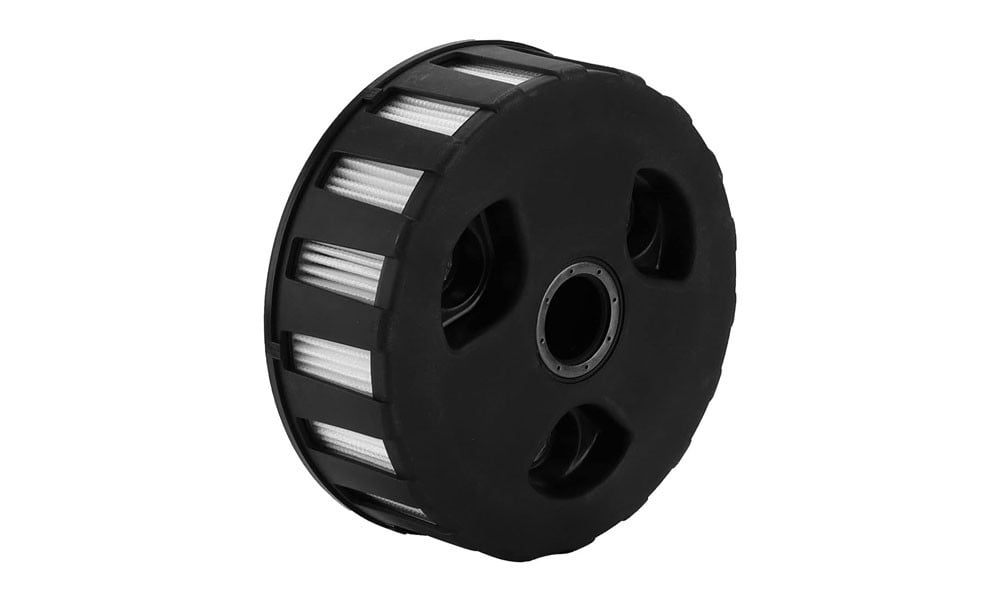
Hengst is not merely a spare parts manufacturer; it is an original equipment (OE) development partner to automotive giants such as Mercedes-Benz, MAN, Scania, Volvo, and DAF. Hengst’s technological superiority in crankcase ventilation systems is embedded in its synthetic media structure known as Blue.at, which offers unparalleled filtration capacity. This special structure captures even oil particles invisible to the naked eye, binds them together, increases their mass, and returns them to the crankcase with the help of gravity. As a result, the air entering the intake system remains completely clean, improving combustion quality.
Crankcase pressure balance is one of the most critical equations for engine longevity in heavy-duty vehicles. Excessive pressure causes seals and gaskets to fail; insufficient pressure allows uncontrolled ingress of dust and moisture. Hengst filters maintain ideal crankcase pressure at all engine speeds—from idle to full-load uphill operation—thanks to integrated precision pressure control valves. This balance ensures that internal engine components operate under optimal lubrication conditions.

Symptoms of a Clogged Crankcase Filter and Turbocharger Failures
Many truck owners and fleet managers neglect the crankcase ventilation filter, often triggering chain failures that can be 100 times more expensive than the filter itself. When the filter fails to adequately separate oily vapor, this sticky and contaminated air is drawn directly into the turbocharger intake. Oil droplets striking turbo impellers rotating thousands of times per second gradually form hardened carbon deposits (soot) on the blades. These deposits disrupt the turbo’s precise balance, eventually leading to shaft failure or complete turbo seizure. If you experience recurring turbo failures, the root cause is most likely an incorrectly selected or clogged crankcase filter.
The intercooler system is also affected. Unfiltered oily air cools and condenses while passing through the intercooler, accumulating at the bottom of the radiator. This accumulation reduces cooling efficiency, causes loss of engine power, and can trigger a dangerous process known as “engine runaway,” where the engine uncontrollably burns its own oil and risks self-destruction.
DPF and Sensor Health in Euro 6 Engines
Modern Euro 6 engines are equipped with sensitive sensors and a Diesel Particulate Filter (DPF) in the exhaust system. When the crankcase filter fails and oily air enters the combustion chamber, burned oil residues reach the exhaust system. The ash formed by oil combustion clogs the DPF far faster and more irreversibly than normal soot. DPF cleaning or replacement is a highly costly operation capable of disrupting a truck’s annual maintenance budget.
Furthermore, microscopic oil film contamination on MAF (mass airflow) and MAP sensors, which measure air flow and pressure, causes incorrect data to be sent to the ECU. This results in frequent limp mode activation, erratic gear shifting, and unreasonable increases in fuel consumption. Hengst filters protect these sensitive sensors, ensuring your truck operates according to factory specifications.
The Critical Role of Crankcase Ventilation Filters in Winter Conditions
During winter, engine blocks and ventilation hoses cool rapidly due to freezing ambient temperatures. When hot oil vapor contacts these cold surfaces, it creates condensation similar to steam on a bathroom mirror. This moisture combines with oil to form a sludge-like substance known as “mayonnaise.” Low-quality filters swell rapidly under these cold, sticky conditions, lose permeability, and suffocate the engine.
Hengst crankcase ventilation filters maintain engine performance even on the harshest winter routes thanks to special chemical coatings resistant to freezing, swelling, and sludge formation, as well as integrated heating options. Replacing the crankcase ventilation filter with Hengst before winter nearly eliminates the risk of “air system freezing” and “oil leaks” during cold operations.
Mesay Otomotiv: Hengst Filtration Expertise in Türkiye
With 55 years of unshakable trust in the heavy-duty spare parts sector, Mesay Otomotiv delivers German engineering across Türkiye as an official and expert supplier of Hengst. As with air suspension, transmission, and engine components, we do not merely sell parts in filtration—we act as your technical solution partner to ensure uninterrupted operations.
Thanks to Mesay Otomotiv’s chassis-based 100% compatibility analysis, we identify the exact Hengst code installed at the factory for your vehicle—whether it is a Scania G-Series, Volvo FH, Mercedes Actros, MAN TGX, or DAF XF—within seconds. With our extensive stock strength, we prevent costly logistics delays and deliver professional filtration solutions that double the lifespan of your turbocharger, sensors, and emission systems.
Why Should You Choose Original Hengst Crankcase Filters?
The crankcase ventilation filter is the hidden conductor orchestrating engine cleanliness and efficiency. Compromising on quality in this component means accepting turbo failure, DPF clogging, and increased fuel consumption. With 99.9% oil separation performance and precise pressure regulation, Hengst crankcase ventilation filters are the insurance policy of your heavy-duty engine.
If you want to reduce fleet maintenance costs, prevent unplanned downtime, and secure your truck’s engine lifespan, choose the German giant Hengst for filtration and Mesay Otomotiv—with over half a century of experience—for supply. Remember, avoiding surprise roadside failures starts with uncompromised quality at the point where your engine breathes.
Contact us today to receive a quotation for the most suitable Hengst crankcase ventilation filter for your engine type and operating conditions. Our expert technical team is ready to prepare customized technical support and pricing based on your chassis number.
