


Volvo Engine Sealing Technology: Stop Oil Leaks with the 735540 (3095043) Elring Oil Seal Set
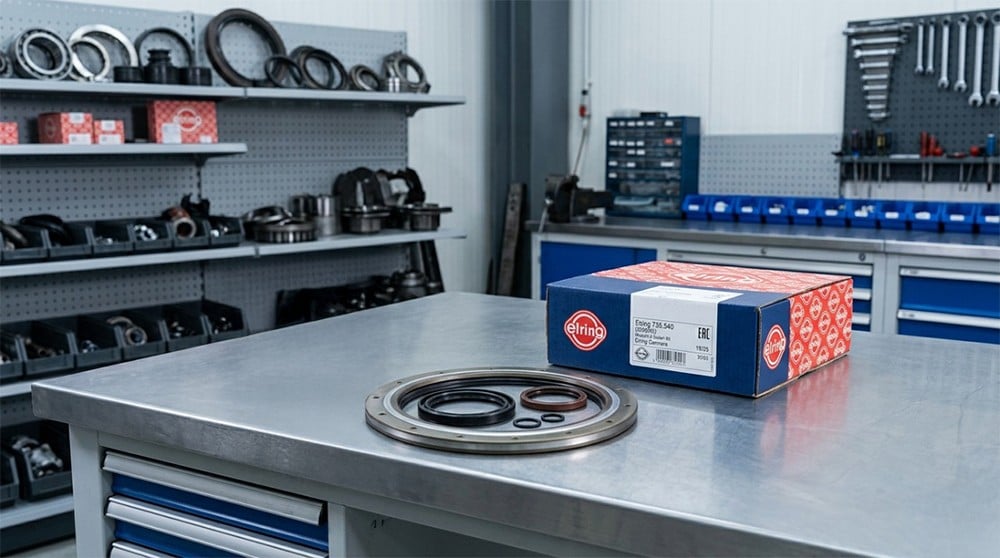
In the heavy-duty segment, especially in Volvo’s high-engineering engines such as the D11, D13, and D16, sealing is far more than a mechanical detail. These engines are designed to operate under extremely high torque and internal pressure. Preventing engine oil, which circulates under such intense pressure, from leaking out at the junction points of moving components such as the crankshaft or camshaft is the most fundamental factor determining engine lifespan. The 735540 (3095043) Elring product, developed by Elring-Klinger, an original equipment (OE) supplier to global automotive giants, is designed to fully comply with Volvo’s heavy-duty operating conditions.
In modern logistics operations, a vehicle’s efficiency is measured not only by its fuel consumption but also by the minimal time it spends in service. Removing a vehicle from operation due to a leaking seal results in both downtime and high labor costs. Therefore, working with brands that meet global standards in sealing components is the key to long-term profitability.
Elring PTFE (Teflon) Technology: Why It Is Superior to Traditional Seals
Standard rubber or elastomer seals used in older engines are insufficient to meet today’s high-temperature and extended maintenance interval standards. Euro 5 and Euro 6 engines operate at higher temperatures and with synthetic oils that contain more aggressive chemical compositions.
The 735540 (3095043) Elring product solves this issue fundamentally with PTFE (Polytetrafluoroethylene), commonly known as Teflon, used in its lip structure. The technical advantages provided by PTFE seals are as follows:
· Temperature Stability: PTFE material maintains its elasticity even under extreme temperatures ranging from -40°C to +250°C. Unlike standard seals, it does not harden due to heat exposure.
· Low Friction and Energy Efficiency: It has a very low friction coefficient. This creates less resistance on rotating shafts, preventing overheating and contributing to overall engine efficiency at a microscopic level.
· Wear Resistance: Even if the shaft surface is slightly rough, the PTFE lip structure adapts over time and maintains sealing performance.
· Dry Running Capability: When the engine is stopped, oil drains back into the sump. During the first start, before oil reaches the seal, PTFE’s self-lubricating property minimizes wear to near zero.
The Hidden Damages of Oil Leaks in Volvo D13 Engines and Early Diagnosis
Many users may ignore minor oil seepage, thinking they can simply top up the oil as needed. However, in vehicles equipped with sensitive electronic sensors like Volvo, an oil leak is never just fluid loss. The process typically progresses through a domino effect:
1. Electrical Failures and Short Circuits: Leaking oil flows over the engine block and contaminates wiring harnesses and critical components such as the crankshaft position sensor. Over time, oil degrades cable insulation, leading to unpredictable electrical faults and sudden engine shutdowns.
2. Cooling System Failure: Engine oil is one of the biggest enemies of rubber hoses. Oil droplets leaking from seals can degrade cooling hoses, causing them to swell and burst at the worst possible moment.
3. Clutch and Transmission Damage: Oil leaking from the rear crankshaft seal can reach the flywheel and clutch disc. An oil-contaminated clutch begins to slip, gear shifts become difficult, and eventually the vehicle breaks down. This situation transforms a simple seal replacement into a costly full clutch system replacement.
Elring Volvo Oil Seal Kit allows you to break this costly chain of failures at the very first stage.
Technical Guide: Critical Mistakes and Correct Practices in Installing Elring PTFE Oil Seals
The installation process is just as critical as the quality of the oil seal itself. Especially with PTFE (Teflon) seals, using traditional methods can immediately damage the component. Here are the key professional tips:
1. Perform Absolutely DRY Installation
This is the most common mistake among technicians. Traditional rubber seals were lubricated during installation. However, 735540 Elring PTFE seals must be installed completely DRY and WITHOUT OIL. The PTFE lip transfers a microscopic Teflon layer onto the shaft surface during rotation. If oil is present, this transfer cannot occur, and the seal will start leaking.
2. The “Waiting Time” Golden Rule
PTFE seals are less flexible but highly durable components. The lip structure, which slightly deforms during installation, needs time to fully adapt to the shaft surface. After installation, the engine should not be started for at least 4 hours (ideally overnight). Acting impatiently can cause immediate damage to the new seal.
3. Prepare the Shaft Surface and Housing
A new seal cannot provide proper sealing on a scratched or worn shaft. If you can feel grooves on the shaft surface, simply replacing the seal is not sufficient. In such cases, the shaft must be reconditioned or repair sleeves should be used. Additionally, the housing where the seal is installed must be completely cleaned of old seal residues and contaminants.
Total Cost of Ownership in Volvo Fleet Management: Why Elring Is More Economical
At first glance, aftermarket products may seem more attractive. However, in logistics, there is no such thing as a “cheap part”—only “expensive mistakes.” A low-quality seal that saves a small amount initially can lead to the following costs within months:
· Re-entering the service and at least 2 days of downtime.
· High labor costs for transmission or front cover removal.
· Environmental damage and inspection issues caused by oil leakage.
Elring is Volvo’s original equipment partner. The 735540 (3095043) product represents the same standards as when the vehicle left the factory. With long-lasting performance, high chemical resistance, and perfect installation compatibility, Elring is actually the most profitable investment that reduces total operating costs.
Sustainability and Future Sealing Technologies
Elring-Klinger develops products not only for today’s engines but also with future emission standards in mind. Low-friction seals reduce internal engine resistance, helping to lower CO2 emissions. Additionally, long-lasting sealing products prevent engine oil from leaking into the environment, protecting soil and water resources. This is a hidden advantage that strengthens your company’s environmental profile and contributes to sustainability goals.
Controlling and protecting the immense power of Volvo engines depends on using the right part with the right method. Sealing is a factor that, if neglected, grows into major problems, but when taken seriously, extends engine life. Every replacement with Elring technology gives your engine a fresh start and a leak-free future.
On one side stands century-old German technology, Elring; on the other, the giant of the heavy-duty world, Volvo. When these two come together, the sealing performance they create becomes your greatest assurance on the road. Time is money, but the right part is life. May your engine always remain clean and your performance always stay at its peak.
In our next technical review, we will continue exploring the inner world of engine components. Until then, see you on the roads where everything runs flawlessly and without leaks. Take good care of yourself and your hardworking Volvo.
