


What is Wheel Bearing Failure? Symptoms and Solutions for Wheel Bearing Failure in Heavy Vehicles.
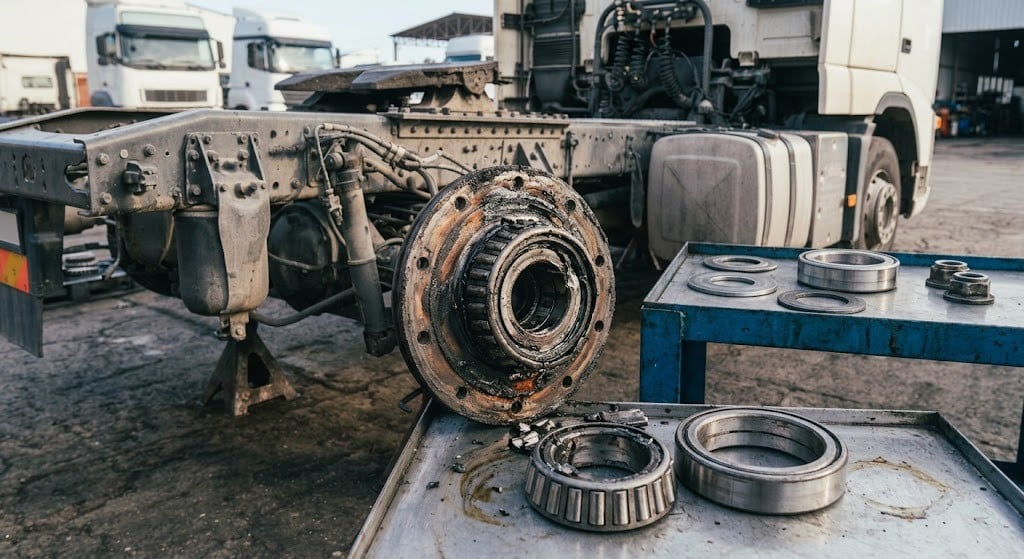
Wheel bearings play an important role in ensuring safe and balanced driving in heavy-duty vehicles. In high-weight vehicles such as trucks, lorries, tractor units and buses, wheel bearings are constantly exposed to heavy loads, vibration and road conditions.
A wheel bearing is a mechanical component that allows the wheel to rotate smoothly, quietly and with low friction on the axle. Over time, bearing faults may occur due to wear, insufficient lubrication, excessive loads or impacts.
A wheel bearing fault may initially appear only through minor symptoms such as noise and vibration. However, if it is not addressed in time, it may cause more serious damage to the wheel hub, braking system, tyres and suspension components.
So, how can a wheel bearing fault be identified? What happens if a wheel bearing fails? Why does a truck produce a humming noise? When should a bearing be replaced?
In this article, we examine in detail the most frequently asked topics, such as symptoms of wheel bearing faults, bearing problems in heavy-duty vehicles, why bearings fail, whether a vehicle can be driven with a faulty wheel bearing and wheel bearing maintenance recommendations.
What Is a Wheel Bearing and What Does It Do?
A wheel bearing is a rotating connection component that allows the vehicle's wheels to turn freely on the axle system.
While the vehicle is moving, the wheels rotate continuously and the bearings reduce the friction generated during this rotation.
The main functions of a wheel bearing are:
- Ensuring balanced wheel rotation,
- Reducing friction,
- Supporting wheel movement,
- Carrying the vehicle load safely,
- Improving driving comfort.
Bearings in heavy-duty vehicles are exposed to much greater forces. Therefore, they are more durable than those used in passenger cars, but they still have a limited service life.
What Is a Wheel Bearing Fault?
A wheel bearing fault occurs when the balls, rollers, bearing surface or lubrication system inside the bearing can no longer perform its function.
Over time, the bearing may develop:
- Wear,
- Overheating,
- Excessive play,
- Loss of lubricant,
- Damage to metal surfaces
and similar problems.
This prevents the wheel from rotating properly and causes different symptoms while driving.
What Are the Symptoms of a Wheel Bearing Fault?
A Humming or Growling Noise While Driving
One of the most common symptoms of a wheel bearing fault is a humming noise heard while the vehicle is moving.
When the components inside the bearing wear, friction increases as the wheel rotates and a noticeable noise develops.
This noise generally:
- Increases as speed rises.
- Becomes more noticeable at a constant speed.
- May change while cornering.
A continuous humming noise, especially at high speeds, is an important sign that the wheel bearing should be inspected.
A Change in Noise While Cornering May Indicate a Bearing Fault
With wheel bearing problems, the noise may change while cornering.
For example:
- Noise increasing during a right turn,
- Noise decreasing during a left turn,
- A humming sound changing with load
may indicate that the pressure on the bearing is changing.
This symptom may help identify which wheel bearing has a problem.
Vibration in the Steering Wheel or Vehicle
A damaged wheel bearing may make it difficult for the vehicle to move in a balanced manner.
When excessive play develops in the bearing:
- Steering wheel vibration,
- Vehicle shaking,
- Changes in road holding,
- An unstable driving sensation
may occur.
However, not every vibration is caused by a bearing. Tyre balance, suspension components or the braking system may create similar symptoms.
For this reason, an accurate diagnosis should be made.
Excessive Heat Around the Wheel
Faulty bearings may overheat because increased friction generates more heat than normal.
During inspections after a long journey, if the following are noticed:
- Excessive heat around the wheel rim,
- Heating of the wheel hub,
- A smell of burnt grease
the bearing should be inspected.
Excessive heat may cause complete bearing failure and more serious damage.
Excessive Play in the Wheel
In a healthy wheel system, the wheel should not have noticeable free play.
When the bearing wears, looseness may develop in the wheel connection.
In this case:
- The wheel may wobble.
- Steering control may become more difficult.
- The tyre may wear unevenly.
- Braking performance may be affected.
Wheel play is a serious safety issue and should not be ignored.
Irregularities May Develop in the Braking System
The wheel bearing is not directly part of the braking system, but deterioration in the wheel connection may affect braking performance.
When bearing play develops:
- The brake disc alignment may be disrupted.
- Brake pad contact may become irregular.
- Vibration may be felt during braking.
This condition may create greater risks, especially in heavy-duty vehicles.
Why Does a Wheel Bearing Fail?
Excessive Loads
Carrying loads above capacity in heavy-duty vehicles places additional pressure on the wheel bearings.
Excessive loads may cause:
- Faster wear of bearing surfaces.
- Increased heat.
- A shorter component life.
Bearing inspections should be performed more frequently, especially in vehicles that continuously carry heavy loads.
Insufficient Lubrication
Adequate lubrication is required for bearings to operate correctly.
When lubrication is insufficient:
- Friction increases.
- Temperature rises.
- Metal surfaces are damaged.
- The bearing may fail within a short time.
Using the wrong lubricant or problems with grease seals may also reduce bearing life.
Water and Dirt Ingress
Wheel bearings are components exposed to external environmental conditions.
When water, mud or dirt enters the bearing:
- Corrosion,
- Wear,
- Lubricant deterioration
may occur.
This situation is more common in heavy-duty vehicles operating under demanding off-road conditions.
Impacts and Poor Road Conditions
Potholes, severe impacts and damaged roads may harm wheel bearings.
Impacts may cause:
- Damage to bearing surfaces.
- Strain on wheel connections.
- Excessive play.
For this reason, regular inspection is important for vehicles used under demanding road conditions.
Use of Poor-Quality Spare Parts
Wheel bearings are critical components that carry heavy loads.
Using poor-quality or unsuitable bearings may create:
- A shorter service life,
- Premature wear,
- A safety risk
and similar problems.
It is important to use components that comply with manufacturer standards in heavy-duty vehicles.
Can a Vehicle Be Driven with a Faulty Wheel Bearing?
Even if short-term driving is possible, using a vehicle for a long time with a faulty bearing is not recommended.
Advanced bearing faults may cause:
- The wheel to seize,
- Hub damage,
- Tyre problems,
- Braking system issues
and similar failures.
Bearing faults may create a serious safety risk, especially in vehicles travelling at high speeds and carrying heavy loads.
How Is a Wheel Bearing Fault Diagnosed?
Several different checks are performed to determine a bearing fault accurately.
During inspection:
- Noise analysis is performed.
- Wheel play is checked.
- Wheel rotation is examined.
- Heating is checked.
- The hub and connections are evaluated.
In some cases, bearing noise may be confused with tyre or differential noise. Therefore, an accurate diagnosis is important.
When Should a Wheel Bearing Be Replaced?
Wheel bearings do not have the same service life in every vehicle.
Replacement may be required when:
- There is a continuous humming noise,
- Wheel play has developed,
- Excessive heating is observed,
- Damage to the bearing has been identified,
- Driving safety is affected.
Periodic inspections before symptoms appear may prevent major faults.
How Should Wheel Bearing Maintenance Be Performed?
Regular maintenance should be performed to ensure a long service life for wheel bearings in heavy-duty vehicles.
Key points to consider include:
- Have the wheel connections checked regularly.
- Do not neglect bearing lubrication.
- Avoid carrying excessive loads.
- Have tyre and suspension inspections performed.
- Pay attention to abnormal noises.
- Use high-quality spare parts.
Especially in long-distance commercial vehicles, minor bearing problems can be resolved at a lower cost when detected early.
Frequently Asked Questions
How can a wheel bearing fault be identified?
A wheel bearing fault is generally identified through symptoms such as a humming noise, vibration, wheel play, excessive heat and instability while driving.
Why does a wheel bearing make noise?
Wear of the components inside the bearing, insufficient lubrication or damage increases friction and causes humming and growling noises.
Is a faulty bearing dangerous?
Yes. Especially in heavy-duty vehicles, an advanced bearing fault may create risks involving the wheel connections and driving safety.
At what mileage should a wheel bearing be replaced?
The service life of a bearing varies depending on the vehicle type, load conditions, road conditions and maintenance quality.
Can a bearing fault cause tyre wear?
Yes. When bearing play develops, the wheel alignment may be disrupted and uneven tyre wear may occur.
Why does a wheel bearing overheat?
A bearing may become hotter than normal due to insufficient lubrication, wear or friction between internal components.
Are bearing faults more common in trucks?
Yes. Trucks place greater loads on bearings because of their high weight and long operating periods.
How can bearing noise be distinguished from tyre noise?
Bearing noise is generally a continuous humming sound that increases with speed and may change while cornering. Tyre noise usually varies depending on the road surface and tyre tread pattern.
