


Why Do Trucks Lodge on Hills? The Most Common Causes of Loss of Traction and Solutions.
If a truck travels smoothly on a flat road but suddenly loses power on an incline, cannot maintain its speed, or fails to deliver the expected performance even when you press the accelerator pedal harder, the underlying cause must be investigated. Especially in heavy commercial vehicles used for freight transport, uphill performance is an important indicator of the overall condition of the engine and powertrain system. Even a seemingly minor maintenance issue can lead to serious performance losses and high repair costs over time.
So, why does a truck lose power uphill? Is this situation always caused by an engine fault, or can the fuel system, turbocharger, clutch, or electronic sensors also play a role?
In this article, we examine in detail the most common problems that cause trucks to lose power uphill, their symptoms, how they are diagnosed, and how the issue can be prevented before it becomes more serious.
What Does It Mean When a Truck Loses Power Uphill?
Losing power uphill means that the truck cannot deliver its normal performance on inclined roads, maintain its speed, or generate sufficient traction despite acceleration.
As the engine load increases, the need to produce power also rises. If the engine is not receiving enough fuel, the air intake is restricted, or the turbocharger cannot generate the required pressure, problems that go unnoticed on flat roads begin to become apparent on inclines.
Although drivers sometimes describe this problem simply as "the vehicle has no pulling power," the performance loss may originate from many different mechanical or electronic systems.
Why Does a Truck Lose Power Uphill?
A Clogged Fuel Filter Prevents the Engine from Producing Sufficient Power
One of the most common causes of traction loss uphill is a contaminated fuel filter.
The fuel filter protects the injectors by filtering sediment, rust, water, and other foreign substances from the fuel. However, as the filter becomes clogged over time, the amount of fuel reaching the engine decreases.
Even if the vehicle appears to operate normally on a flat road, it may lose power especially on inclines because the engine cannot receive enough fuel under heavy load.
Fuel filter-related problems usually cause the following symptoms:
- Weakened throttle response
- Loss of speed while climbing uphill
- Reluctance during sudden acceleration
- Increased fuel consumption
Replacing the fuel filter at the maintenance intervals recommended by the manufacturer helps prevent such problems.
The Turbocharger System May Not Be Generating Sufficient Pressure
The turbocharger system is one of the most important components for improving the performance of diesel truck engines.
The turbocharger sends more air into the engine, allowing combustion to take place more efficiently. If the turbocharger is faulty or experiencing pressure loss, the engine cannot produce the power it needs, especially under heavy load.
Symptoms that may occur with turbocharger faults include:
- Noticeable loss of pulling power uphill
- Black exhaust smoke
- A whistling sound from the turbocharger
- Increased fuel consumption
- Illumination of the engine warning light
Cracks in turbo hoses or leaks in the intercooler can also cause similar performance losses.
A Clogged Air Filter Prevents the Engine from Breathing Properly
The engine needs a sufficient amount of clean air to operate efficiently.
A dirty or clogged air filter restricts the air entering the engine. When the amount of air decreases, combustion quality deteriorates and the engine begins to struggle, especially in situations requiring high power, such as climbing uphill.
The air filter should be checked more frequently in vehicles operating on dusty roads, at construction sites, or over long distances.
The Injectors May Experience a Loss of Performance
In diesel engines, the injectors ensure that fuel is sprayed in the correct quantity and at the correct pressure.
Carbon buildup over time, the use of low-quality fuel, or mechanical wear can negatively affect injector performance.
Injector faults may cause:
- Irregular engine operation.
- Loss of pulling power.
- Delayed throttle response.
- Black or white smoke from the exhaust.
Especially in high-mileage trucks, having the injectors tested is important for identifying the source of performance loss.
The Clutch Disc May Be Worn
Not every traction problem originates directly from the engine.
When the clutch disc is worn, power cannot be fully transferred to the transmission even if the engine speed increases. As a result, the vehicle struggles to accelerate, especially when climbing uphill.
Symptoms of a worn clutch include:
- No increase in speed despite rising engine RPM
- A burnt clutch smell
- Difficulty moving off
- A slipping sensation uphill
This condition becomes more noticeable, especially in trucks carrying heavy loads.
The DPF (Diesel Particulate Filter) May Be Clogged
In modern trucks that comply with Euro emission standards, the DPF system is used to reduce exhaust emissions.
However, when the filter becomes full, exhaust gases cannot be discharged freely. The engine is placed under greater strain, and the electronic control unit may limit performance.
DPF-related traction loss is usually accompanied by the following symptoms:
- Engine warning light
- Increased fuel consumption
- Regeneration warnings
- Noticeable performance loss on inclines
The EGR Valve May Be Clogged with Carbon Deposits
The Exhaust Gas Recirculation (EGR) system helps reduce emission levels.
However, the layer of carbon that forms over time can prevent the EGR valve from operating properly.
When the valve remains open, the amount of clean air entering the engine decreases and combustion efficiency drops. This becomes more noticeable, especially when climbing uphill.
The Fuel Pump May Not Be Producing Sufficient Pressure
The fuel pump generates the fuel pressure required by the engine.
When the pump loses performance, the engine may operate under low loads, but the required fuel demand cannot be met when high power is needed.
As a result:
- The vehicle loses power.
- It begins to respond poorly to the accelerator.
- Acceleration slows down.
- The engine may misfire.
Sensor Faults Can Directly Affect Performance
In modern trucks, the engine management system operates using data received from dozens of sensors.
Faults in the following sensors in particular can cause performance loss:
- MAF sensor
- MAP sensor
- Accelerator pedal position sensor
- Crankshaft sensor
- Camshaft sensor
If one of these sensors sends incorrect data, the ECU may limit power output to protect the engine.
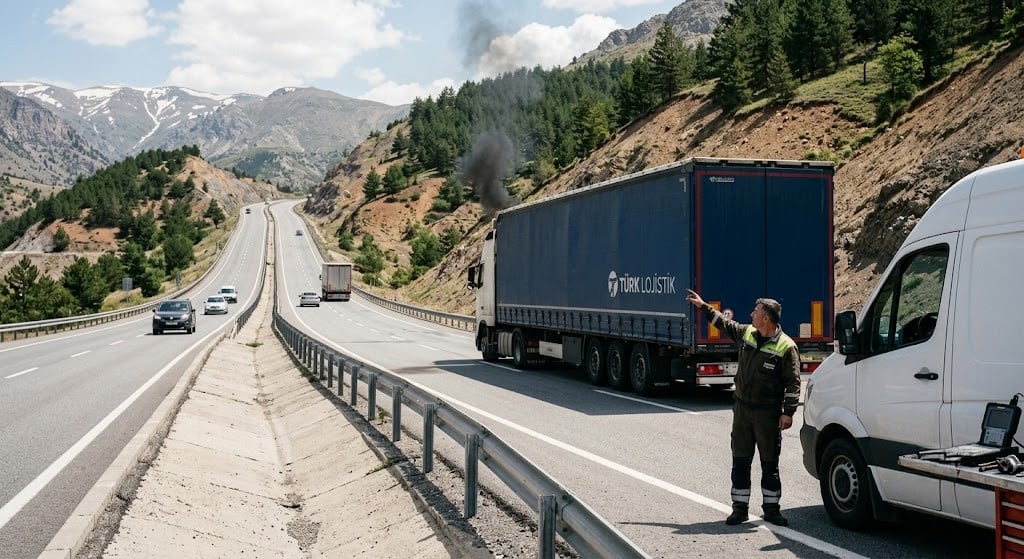
The Engine May Have Entered Protection Mode (Limp Mode)
When the electronic control unit detects a serious fault, it may activate protection mode to prevent engine damage.
In this case:
- Engine RPM is limited.
- The turbocharger does not operate at full capacity.
- The vehicle does not accelerate.
- Uphill performance drops significantly.
Protection mode will not be deactivated until the fault is resolved.
Which Components Should Be Checked If a Truck Loses Power Uphill?
To diagnose the problem correctly, the entire system should be evaluated rather than focusing on a single component.
The components that should be checked first are as follows:
| Component to Be Checked | Possible Effect |
|---|---|
| Fuel filter | Restricts fuel flow. The amount of fuel required by the engine decreases, which may cause loss of pulling power, especially uphill. |
| Air filter | Reduces the amount of clean air entering the engine. As combustion efficiency drops, engine performance is negatively affected. |
| Turbocharger system | If it cannot generate sufficient pressure, the engine cannot produce the expected power and the vehicle loses significant power uphill. |
| Intercooler hoses | Cracks or leaks reduce turbo pressure and decrease engine performance. |
| Injectors | Cause irregular fuel injection, impair combustion quality, and reduce pulling performance. |
| Clutch system | Prevents full transfer of engine power to the transmission. Even if the RPM increases, the vehicle cannot accelerate sufficiently. |
| DPF (Diesel Particulate Filter) | Restricts the flow of exhaust gases. The engine is strained, and the electronic system may limit performance. |
| EGR valve | When it does not operate properly due to carbon buildup, it reduces combustion efficiency and negatively affects the engine's ability to produce power. |
| Fuel pump | Cannot generate the required fuel pressure. The engine may not receive sufficient fuel, especially under heavy load. |
| Sensors (MAF, MAP, Accelerator Pedal, etc.) | May send incorrect data to the ECU, causing the fuel-air mixture to be calculated incorrectly and resulting in performance loss. |
Does Power Loss Uphill Increase Fuel Consumption?
Yes. When the engine cannot produce the required performance, it may consume more fuel to perform the same work.
For example, if turbo pressure is low or the air filter is clogged, combustion efficiency decreases. The engine must operate at high RPM for longer to carry the same load. This not only increases fuel consumption but also causes greater wear on the engine and drivetrain components.
Especially in fleet vehicles, seemingly minor performance losses can turn into significant fuel costs by the end of the year.
Ways to Maintain a Truck's Uphill Performance
Most traction losses experienced uphill can be prevented through regular maintenance.
To support healthy engine operation:
- Replace the fuel and air filters at the prescribed maintenance intervals.
- Use high-quality diesel fuel.
- Do not neglect turbocharger lubrication.
- Complete DPF regeneration processes.
- Have the EGR system checked regularly.
- Inspect the intercooler hoses for leaks.
- Do not ignore the engine warning light.
- Have periodic electronic fault scans performed.
Regular maintenance not only improves performance but also helps prevent unexpected breakdowns and high service costs.
Frequently Asked Questions
Why does the truck lose power only uphill?
The engine requires less power on a flat road. When climbing uphill, however, maximum torque and fuel delivery are expected from the engine. Even minor problems in the fuel system, turbocharger, or air intake become apparent under this load.
Is losing power uphill always caused by a turbocharger fault?
No. Although the turbocharger is one of the main possible causes, the fuel filter, injectors, air filter, clutch disc, DPF, EGR system, or electronic sensors can also cause the same problem.
Can a worn clutch disc cause loss of pulling power?
Yes. When the clutch disc is worn, the power produced by the engine cannot be fully transferred to the transmission. This is particularly noticeable uphill when the engine RPM rises but the vehicle does not accelerate.
Can a truck climb uphill with a clogged fuel filter?
It can, but its performance will drop noticeably. The vehicle may lose speed, throttle response may weaken, and the risk of stalling under heavy load may increase.
Does a clogged DPF affect uphill performance?
Yes. A clogged DPF makes it difficult for exhaust gases to be discharged. The engine is placed under greater strain, and the electronic control unit may limit performance.
What does black smoke while climbing uphill indicate?
It generally suggests a problem with the turbocharger system, air filter, EGR valve, or injectors. A professional inspection is required for an accurate diagnosis.
Can pulling power decrease without the engine warning light coming on?
Yes. Mechanical wear, clogged filters, or early-stage turbocharger problems may not always trigger the engine warning light.
How can power loss uphill be prevented?
Keeping up with periodic maintenance, replacing filters on time, using high-quality fuel, and regularly checking the turbocharger and fuel system significantly reduce the risk of such performance problems.
