


Why Does an Engine Burn Oil? Symptoms, Causes, and Solutions for Oil Burning.
Engine oil burning is one of the common problems encountered in cars, trucks, tractor-trailers, and other heavy-duty vehicles, and it can lead to serious engine damage if neglected. Engine oil reduces friction between moving parts, prevents wear, and helps the engine operate properly. However, when a fault or wear occurs inside the engine, oil may reach the combustion chamber and burn together with the fuel before being expelled through the exhaust.
Especially in diesel heavy-duty engines, engine oil loss can cause performance loss, turbo problems, exhaust system issues, and high repair costs.
So, why does an engine burn oil? Does oil loss always mean the engine is worn out? How can you tell if an engine is burning oil? Can turbo, piston ring, or valve faults cause oil burning?
In this article, we examine in detail the most frequently asked questions, such as causes of engine oil burning, how to tell if an engine is burning oil, why a diesel engine loses oil, why a truck engine burns oil, and how to solve an oil-burning problem.
What Does Engine Oil Burning Mean?
Engine oil burning is the condition in which engine oil reaches the combustion chamber and burns together with the fuel.
Under normal operating conditions, engine oil remains in the sections where the pistons and other moving parts are located. However, when certain components inside the engine fail to perform their function properly, oil may leak into the cylinder.
When engine oil entering the combustion chamber burns:
- Blue or bluish smoke may come from the exhaust.
- The engine oil level decreases.
- Fuel consumption may increase.
- Engine performance may decrease.
- The exhaust system may be damaged.
A very small amount of oil loss over certain mileage intervals may be considered normal in some engines. However, if significant oil loss occurs within a short period, the engine must be inspected.
Why Does an Engine Burn Oil?
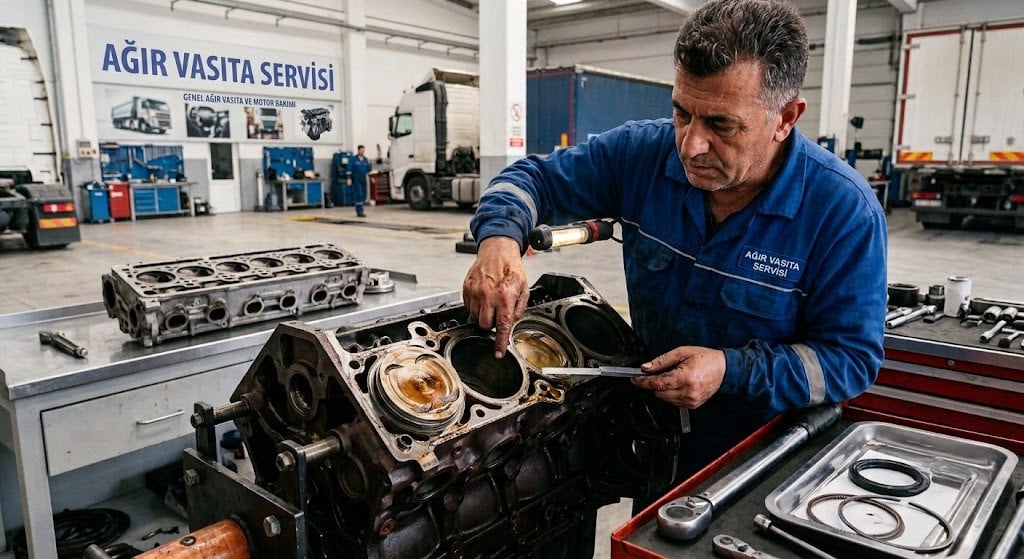
The Piston Rings May Be Worn
One of the most common causes of engine oil burning is worn piston rings.
Piston rings are important components that provide a seal between the piston and the cylinder wall. They also prevent engine oil from entering the combustion chamber.
Over time:
- High mileage,
- Overheating,
- Insufficient maintenance,
- Use of low-quality engine oil
can cause the piston rings to wear.
When the rings can no longer perform their function, oil enters the combustion chamber and the engine begins to burn oil.
Symptoms of piston ring wear:
- Blue exhaust smoke
- Rapid drop in oil level
- Loss of compression
- Reduced engine performance
- Smoke during initial start-up
Piston ring wear is especially common in high-mileage truck and tractor-trailer engines.
The Valve Stem Seals May Be Worn
Valve stem seals are components located in the cylinder head that prevent oil from leaking into the combustion chamber.
Valve stem seals that harden or crack over time can no longer perform their function properly.
In this case, engine oil may flow down through the valves and reach the combustion chamber.
Valve stem seal faults generally cause:
- Blue smoke during the first start in the morning
- Smoke when accelerating after idling
- Oil loss
- Oil residue in the exhaust
to be observed.
Can a Turbo Fault Cause the Engine to Burn Oil?
Yes. Turbo faults are an important cause of oil burning, especially in turbocharged diesel engines.
The shaft and bearing system inside the turbo is lubricated with engine oil. When the turbo shaft wears or the seals leak, engine oil may enter the intake or exhaust side.
Symptoms of turbo-related oil burning:
- Blue exhaust smoke
- Reduced turbo performance
- Increased oil consumption
- Oil accumulation inside the intercooler
- Reduced engine pulling power
If a turbo-related oil-burning problem is neglected, the turbo may fail completely and send excessive amounts of oil into the engine, causing more serious problems.
The Cylinders May Be Worn
If the engine operates at high temperatures for long periods or reaches high mileage, wear may occur on the cylinder surfaces.
As the clearance between the cylinder and piston increases, engine oil can reach the combustion chamber more easily.
In this case:
- Compression decreases.
- Engine performance declines.
- Oil consumption increases.
- Exhaust smoke occurs.
These types of wear may appear earlier in commercial vehicles operating under heavy loads because their engine operating conditions are more demanding.
The Crankcase Ventilation System May Be Faulty
The crankcase ventilation system is used to control the pressure generated inside the engine.
When this system becomes clogged or faulty, pressure inside the engine increases.
High pressure can cause:
- Oil to be forced into the combustion chamber,
- Oil leaks,
- Excessive strain on seals
to occur.
Crankcase ventilation problems may increase oil consumption and cause oil deposits around the engine.
Can Using the Wrong Engine Oil Increase Oil Burning?
Yes. Using oil with a viscosity different from that recommended by the engine manufacturer may increase oil consumption in some cases.
For example:
- Using oil that is too thin,
- Using low-quality oil,
- Using an unsuitable oil specification
may disrupt oil control between engine components.
The correct engine oil should be selected according to:
- The engine's operating temperature,
- Its mileage,
- Operating conditions,
- Manufacturer recommendations
.
How Can You Tell If an Engine Is Burning Oil?
An engine oil-burning problem reveals itself through certain symptoms.
The most common symptoms are:
| Symptom | Possible Cause |
|---|---|
| Blue smoke coming from the exhaust | Indicates that oil is entering the combustion chamber. |
| Continuous oil loss | There may be internal oil consumption or a leak. |
| Loss of performance | There may be compression loss or engine wear. |
| Oil around the spark plugs or injectors | There may be an oil-related problem in the combustion system. |
| Oil residue at the exhaust tip | May indicate that oil is being burned and expelled. |
| Oil accumulation around the turbo | There may be a leak in the turbo seals. |
Does Engine Performance Decrease When It Burns Oil?
Yes. When an engine begins to burn oil, not only does oil consumption increase, but the engine's operating efficiency is also affected.
As a result of oil burning:
- Carbon deposits may form in the combustion chamber.
- The turbo and exhaust systems may be damaged.
- Engine compression may decrease.
- Fuel consumption may increase.
- Engine power may decrease.
Especially in heavy-duty vehicles, even minor performance losses can increase fuel costs and operating expenses.
What Happens If the Engine Continues to Burn Oil?
If the oil-burning problem is not resolved for a long time, more serious engine faults may occur.
Possible consequences:
- Turbo damage
- Piston and ring wear
- Cylinder deformation
- DPF blockage
- Catalytic converter damage
- Need for engine overhaul
Engine oil does more than lubricate; it also helps cool the engine and protect its components. A continuously falling oil level can cause serious engine damage.
How Is an Engine Oil-Burning Problem Resolved?
The solution to an oil-burning problem varies depending on its source.
Possible procedures include:
- Turbo inspection and turbo overhaul if necessary
- Performing a compression test
- Inspecting the piston rings
- Replacing the valve stem seals
- Cleaning the crankcase ventilation system
- Using the correct engine oil
- Engine overhaul
Trying to conceal oil burning by simply using thicker oil is generally not a permanent solution. The actual cause of oil consumption must first be identified.
Why Is Oil Burning More Critical in Heavy-Duty Engines?
Truck, tractor-trailer, and tractor unit engines operate under heavy loads for long periods.
Therefore:
- Engine temperatures are higher.
- Operating hours are longer.
- Turbo systems are under greater load.
- Mileage accumulation is more intensive.
For this reason, an oil-burning problem in heavy-duty engines can worsen more quickly if it is not detected early.
Regular oil level checks, proper maintenance, and the use of high-quality oil directly affect the service life of heavy-duty engines.
What Should Be Done to Prevent Engine Oil Burning?
To prevent engine oil burning or detect it early, the following points should be considered:
- Check the engine oil level regularly.
- Use oil that complies with the manufacturer's recommendations.
- Do not delay oil changes.
- Use a high-quality oil filter.
- Have the turbo system inspected regularly.
- Avoid overloading the engine.
- Take overheating problems seriously.
- Monitor unusual exhaust smoke.
Regular maintenance is one of the most important factors in ensuring a long engine service life.
Frequently Asked Questions
What color smoke comes out when an engine burns oil?
When an engine burns oil, blue or bluish-gray smoke generally comes from the exhaust. This may indicate that engine oil has reached the combustion chamber.
Is it normal for an engine to burn oil?
A very low level of oil loss may be considered normal in some engines. However, if oil needs to be added frequently, the engine must be inspected for faults.
Can a turbo fault cause oil burning?
Yes. Faults in the turbo seals or shaft system can cause engine oil to enter the intake or exhaust line.
Can worn piston rings cause an engine to burn oil?
Yes. Worn piston rings allow oil to enter the combustion chamber, leading to an oil-burning problem.
Can a vehicle continue to be used while the engine is burning oil?
Short-term use may be possible, but prolonged operation without resolving the problem can increase engine damage.
Does using thicker oil stop oil burning?
Thicker oil may temporarily reduce oil consumption in some cases, but it does not resolve the actual fault. The cause of the oil burning must first be identified.
Does engine oil burning increase fuel consumption?
It may increase it indirectly. When engine efficiency decreases, performance loss and a higher operating load may occur.
Why does a truck engine burn oil?
High mileage, turbo wear, piston ring problems, valve leaks, and demanding operating conditions are among the main causes of oil burning in truck engines.
