


Silent Power of the Transmission: 109.135 (1308304078) CEI Product Synchronizer Cone for Flawless Gear Shifts in Heavy Vehicles
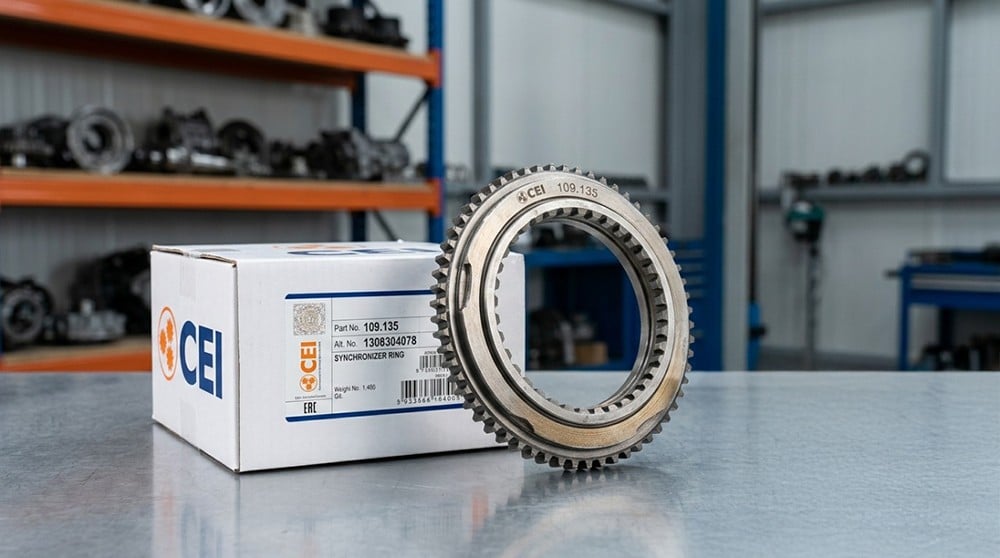
In heavy-duty transportation, the transmission is the most complex mechanism that controls and transfers the immense torque produced by the engine to the road. Within this system, there is an art of “speed synchronization” that takes place in milliseconds during gear changes. The moment the driver touches the gear lever, a component deep inside the transmission ensures that the gears engage smoothly, silently, and without damage. This critical component is the synchronizer cone. As Mesay Otomotiv, in our more than fifty-five years of experience, we have repeatedly observed that the most sensitive point of transmission overhauls is these cones. The 109.135 (1308304078) CEI product, manufactured by CEI, a leading Italian brand in transmission technologies, is a durable and precise engineering solution specially designed for ZF transmission systems.
In heavy-duty vehicles, transmission failures are generally costly and time-consuming operations. Removing, disassembling, and reassembling a tractor’s transmission means the vehicle remains out of service for days. Therefore, when undertaking such a demanding task, ensuring the quality of the parts used is a vital decision for operational sustainability. CEI is one of the rare brands that offers OEM-quality components, providing the assurance that once the transmission is closed, it will not need to be opened again for hundreds of thousands of kilometers.
The Vital Function and Working Dynamics of the Synchronizer Cone Inside the Transmission
The synchronizer system uses friction force to bring two gear groups rotating at different speeds to the same speed. The 109.135 (1308304078) CEI product forms the main friction surface of this system. When the gear shift begins, the gear sleeve presses against this cone, and the cone acts like a “brake,” synchronizing the speeds of the gears. If this component does not have micron-level surface precision as in CEI products, gear changes become stiff, noisy, and difficult. A high-quality cone minimizes the resistance felt by the driver at the gear lever while also reducing mechanical stress within the transmission.
CEI engineering does not merely shape a piece of metal when producing these cones; it also calculates the material’s thermal expansion coefficient and oil retention capacity. The fine grooves on the cone allow transmission oil to be properly expelled, enabling friction to occur at exactly the right moment. If oil evacuation fails, a film remains between the cone and the gear, causing the gear to “slip” or fail to engage. This precise operation is essential for fast and safe gear changes, especially when a heavily loaded vehicle is climbing or descending slopes.
The Advantages of CEI Quality in ZF Transmissions and Material Science
ZF transmission systems are among the most advanced gearboxes in the world, built to the highest engineering standards. Any replacement part used in these systems must maintain the overall balance of the system. As an OEM-quality brand, CEI uses high-carbon, wear-resistant alloys in the production of the 109.135 Synchronizer Cone.
Standard aftermarket cones often lose their surface hardness quickly due to errors in heat treatment processes. A worn or deformed cone cannot synchronize gears, leading to damage to gear edges. Trying to save money on a low-cost cone can result in the need to replace entire gear groups and sleeves, leading to significantly higher costs. Choosing CEI protects your transmission from such expensive failures. These cones, crafted with Italian expertise, are also known for their resistance to metal fatigue.
The “Hidden Danger” in the Transmission: Signs of Worn Cones and Early Diagnosis
Before opening a transmission, there are several signs that indicate a synchronizer cone has reached the end of its lifespan. The most common symptom is difficulty in gear engagement, especially when shifting from higher gears to lower gears, often accompanied by a metallic impact sound or resistance in the gear lever. If the gear lever shakes or requires double clutching to engage properly, it indicates that the synchronizer cone’s friction surface can no longer expel oil effectively or its geometry has deteriorated.
In cold weather, gear shifting issues when the transmission oil is still thick are a clear indication that the microscopic grooves on the cone have worn out. If these signs are ignored, metal particles from the worn cone can clog the transmission oil filter, damage synchronizer gears, and even enter the bearings, leading to complete transmission failure. Therefore, timely replacement with the 109.135 (1308304078) CEI product is a strategic move that extends the operational lifespan of your vehicle.
Installation Precision and Technical Tips for Transmission Health
Replacing a synchronizer cone is a mechanical operation that requires expertise. When installing a new CEI cone, internal cleanliness of the transmission is as important as the quality of the component. Metal debris from old parts can adhere to the new cone’s surface and disrupt its friction characteristics. Additionally, inspecting the synchronizer ring, springs, and sliding sleeves that work together with the cone, and replacing them as a set if necessary, is highly recommended. Transmission components operate as a team; if one member is worn, it can reduce the performance of the new parts.
Another critical factor is transmission oil. Special high-pressure (EP) oils developed for ZF transmissions enhance the adhesion capability of the synchronizer cone surface. Poor-quality or incorrect viscosity oil can wear out even the best cone within a few months. As professionals, we always emphasize: “Good parts, the right oil, and clean workmanship—this trio makes a transmission last a lifetime.” CEI products form the strongest link in this trio.
Fuel Savings and Momentum Preservation Through Smooth Gear Shifts
The relationship between transmission components and fuel economy is often overlooked. However, delays or difficulties during gear changes mean the engine moves out of its optimal RPM range (green zone). In a vehicle with a perfectly functioning synchronizer cone, gear shifts are so quick and smooth that the vehicle’s momentum is preserved.
Even a 1–2 second delay in gear changes, especially in a fully loaded vehicle, causes a drop in speed, requiring the engine to use extra power to regain it. Over thousands of gear shifts per day, this results in significant fuel loss. By using the 109.135 (1308304078) CEI product, you are not only performing a mechanical repair but also optimizing your vehicle’s driving efficiency.
The Economic Impact of Choosing the Right Part in Heavy-Duty Operations
In logistics operations, the most expensive spare part is the one that fails due to incorrect selection. When you choose a CEI product, you are preventing not only current repair costs but also future potential failures. The CEI products we stock at Mesay Otomotiv are manufactured with the strictest factory tolerances, eliminating risks such as incompatibility or improper fit during installation. This quality, which makes the job easier for technicians and builds confidence for drivers, ultimately contributes to your company’s hidden profitability.
The heavy-duty sector is a field shaped by effort and patience. For drivers who spend long hours on the road, the smoothness of the gear lever is not just about comfort—it reduces fatigue and prevents loss of concentration. For technicians performing transmission overhauls, ensuring that the installed part does not return is the greatest professional pride and satisfaction.
Until we meet again for another technical discussion or a cup of tea, take good care of yourself and your hardworking road companion!
