


WHISTLING SOUND AND LOSS OF TRACTION FROM A TRUCK ENGINE: HOW TO IDENTIFY TURBO AND INTERCOOLER FAILURES?
One of the most frustrating scenarios on the road for heavy-duty vehicle drivers and fleet managers is when the engine loses its familiar power while climbing a hill or under full load, accompanied by a thin, high-pitched whistling sound leaking into the cabin. A truck engine, especially when equipped with modern diesel technology, owes much of its power to the efficiency of the air intake system. The two most critical players in this system are the turbocharger and the intercooler unit. A whistling sound coming from the truck engine is usually the first and clearest sign that something is not going right. While this sound may sometimes appear to be a simple loose hose, it can also be the warning sign of a turbo failure worth thousands of dollars. When combined with loss of traction, this situation not only reduces the vehicle’s performance but also dramatically increases fuel consumption, raising operating costs. In this article, we will examine the symptoms, diagnostic methods, and solutions of this critical problem occurring in truck engines from the perspective of a technical expert, but in a language that every driver can understand.
The Mystery of the Whistling Sound: Air Leak or Mechanical Destruction?
The whistling sound coming from under the hood should technically be examined in two main categories. The first is the sound caused by physical wear inside the turbo’s internal mechanism; the second is the sound created by pressurized air leaking out of the system. If the turbo whistling sound increases only when you press the accelerator and decreases when you release it, this usually indicates an air leak in the system. However, if the sound is more like a metallic rubbing or whining, there is a high probability that the blades (impellers) inside the turbo are rubbing against the housing.
In the case of an air leak, the high-pressure air produced by the turbo escapes through a cracked hose or a loosened clamp, producing a sound almost like a flute. This is one of the most common causes of engine performance loss. Because the engine control unit (ECU) sends fuel according to the air pressure generated by the turbo. When air escapes, insufficient oxygen enters the combustion chamber, which causes reduced pulling power and black smoke from the exhaust. If the whistling sound becomes very sharp and feels like a siren is sounding inside the engine, this indicates excessive clearance in the turbo shaft bearing, which is a sign that the turbo may fail at any moment.
The Background of Traction Loss and Performance Drop
When a truck loses power on a hill or does not respond to the accelerator, it not only tires the driver but also creates extra load on the transmission and clutch. When truck traction loss occurs, the first component that comes to mind is the turbo, but the system should be evaluated as a whole. The turbocharger uses the energy of exhaust gases to send clean air into the cylinders at high pressure. If there is a break in the turbo blades or a seizure in the shaft, the system cannot produce sufficient pressure (boost). Insufficient pressure means the engine cannot “breathe.”
During heavy-duty vehicle repair processes, one of the first checks performed on vehicles arriving with traction loss complaints is the data from the turbo pressure sensor (MAP sensor). If the turbo is physically sound but traction is still missing, the problem is usually hidden in the intercooler unit. The intercooler is a radiator that cools the heated air coming from the turbo and increases its density. If this unit is punctured or its internal channels are clogged with soot and oil, airflow becomes restricted. This causes the truck to barely move, especially when loaded. For this reason, intercooler quality is of vital importance when choosing truck spare parts; because even a 10% decrease in cooling capacity directly affects engine efficiency.
Signs of Turbo Failure: Not Limited to Sound Alone
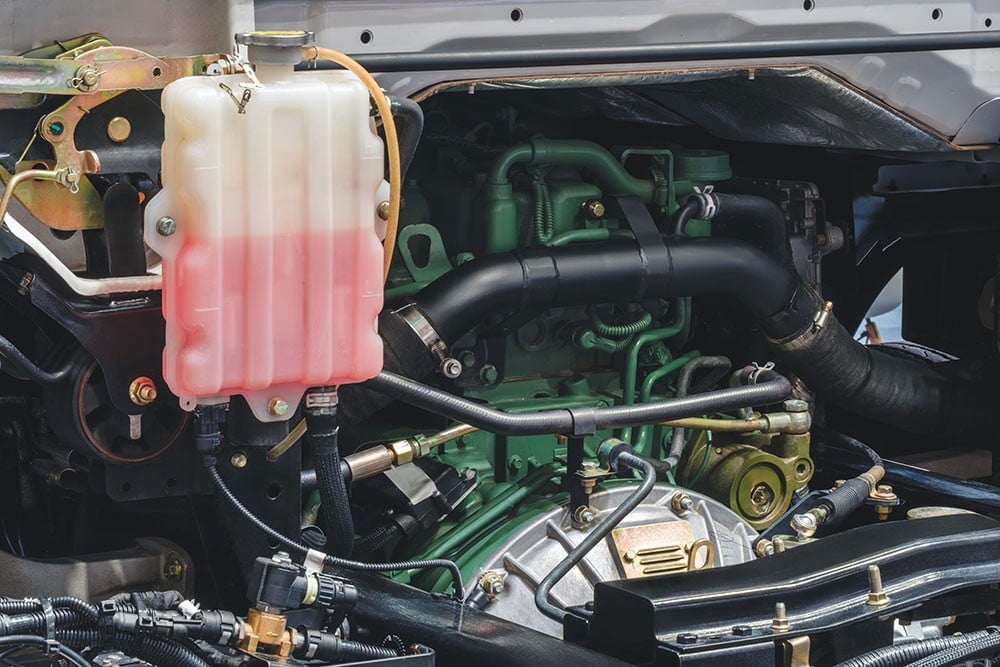
You do not always have to wait for a whistling sound to understand that a turbo has reached the end of its life. The answer to the question how to detect turbo failure is also hidden in the vehicle’s exhaust smoke and oil dipstick. The turbo shaft is lubricated with engine oil, and special seals (rings) prevent this oil from leaking into the combustion chamber. If these seals wear out, the turbo begins spraying oil into the intake line or the exhaust line.
If bluish smoke comes from your vehicle’s exhaust, especially during first start-up or under load, this is clear evidence that the turbo is burning oil. Blue smoke combined with oil consumption indicates that the turbo must be urgently rebuilt or replaced. Another critical symptom is the engine suddenly revving up on its own; in this situation, also known as “engine runaway,” the engine begins to use the oil leaking from the turbo as fuel, which is an extremely dangerous condition that can cause the engine to seize completely. Therefore, during truck fault diagnosis, manually checking the turbo shafts and monitoring oil leaks is of vital importance.
Intercooler and Hose Leaks: Hidden Power Thieves
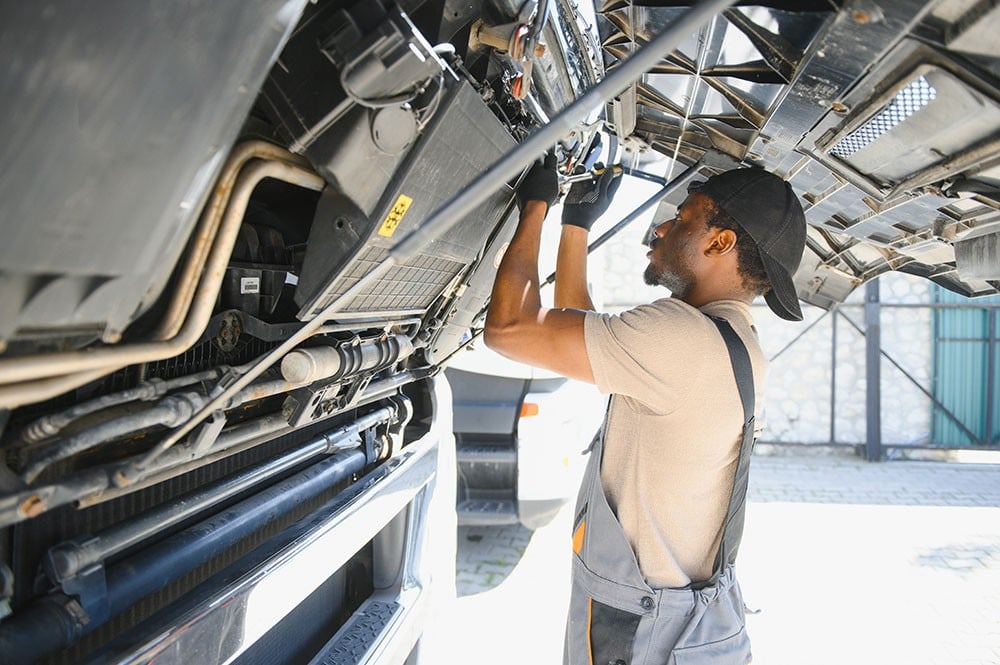
Many truck owners complain that traction problems continue even after replacing the turbo. The reason is usually a cracked intercooler hose or cracks in the intercooler body that go unnoticed. The intercooler is located at the very front of the vehicle, right next to or in front of the radiator. Due to this position, it is highly exposed to stones from the road, corrosion, and vibration. Over time, micro-cracks that form between the intercooler fins may not be noticeable at low speeds, but they open under high pressure and cause air to escape.
Hoses, on the other hand, lose their flexibility and harden over time due to high temperature and pressure cycles. A turbo hose leak usually reveals itself with a “hissing” sound heard during sudden acceleration. However, sometimes the inner layer of the hose tears and closes the air passage like a valve. A hose that appears intact from the outside may actually be creating an internal blockage while the engine is running. In such cases, checking the system with a smoke test is the most professional way to find leaks that cannot be seen with the naked eye. Using original parts or high-quality silicone hoses is the best investment to prevent such hidden leaks.
Correct Diagnosis and Part Selection: Repair or Replacement?
When turbo and intercooler problems are detected, the biggest dilemma for the driver is whether to repair the part or buy a new one. Truck turbo repair requires expertise; the shaft balance and blade calibration must be done at micron level. If there is a crack or severe wear in the turbo housing (snail), revision will usually be short-lived. In this case, choosing an OEM turbo or a reliable spare part brand is much more economical in the medium term.
It should not be forgotten that the thing that damages the turbo is usually not the turbo itself. Dirty oil, a clogged air filter, or a blockage in the exhaust system (such as a DPF failure) are the main factors that shorten turbo life. Before installing a new turbo, the lubrication line must be cleaned and the air filter must be replaced. Otherwise, the newly installed part will share the same fate within a few thousand kilometers.
Extending Turbo Life with a Maintenance Plan
The simplest but most effective way to protect the turbo is to stay loyal to the lubrication system. Using high-quality engine oil and following oil change intervals protects the turbo shaft rotating at high speeds from wear. In addition, a truck that has just completed a long journey or has been heavily strained should not be shut off suddenly. Letting the engine idle for 2-3 minutes before shutting it off (cool-down process) prevents the oil inside the turbo from burning at high temperatures and forming carbon deposits on the shaft.
In summary, the problems of a whistling sound coming from the truck engine and traction loss can sometimes be solved with a simple hose replacement when addressed early, but when neglected they can trigger a process that goes as far as a complete engine overhaul. Listening carefully to these audible and performance-related signals from your vehicle will minimize your risk of being stranded on the road. With the right diagnosis, quality spare parts, and expert workmanship, it is not difficult for your truck to regain its former powerful performance.
