


Mahle Ford 4142 Piston Set: How Mahle Piston and Ford Otosan Cylinder Liner Compatibility Affects Engine Performance
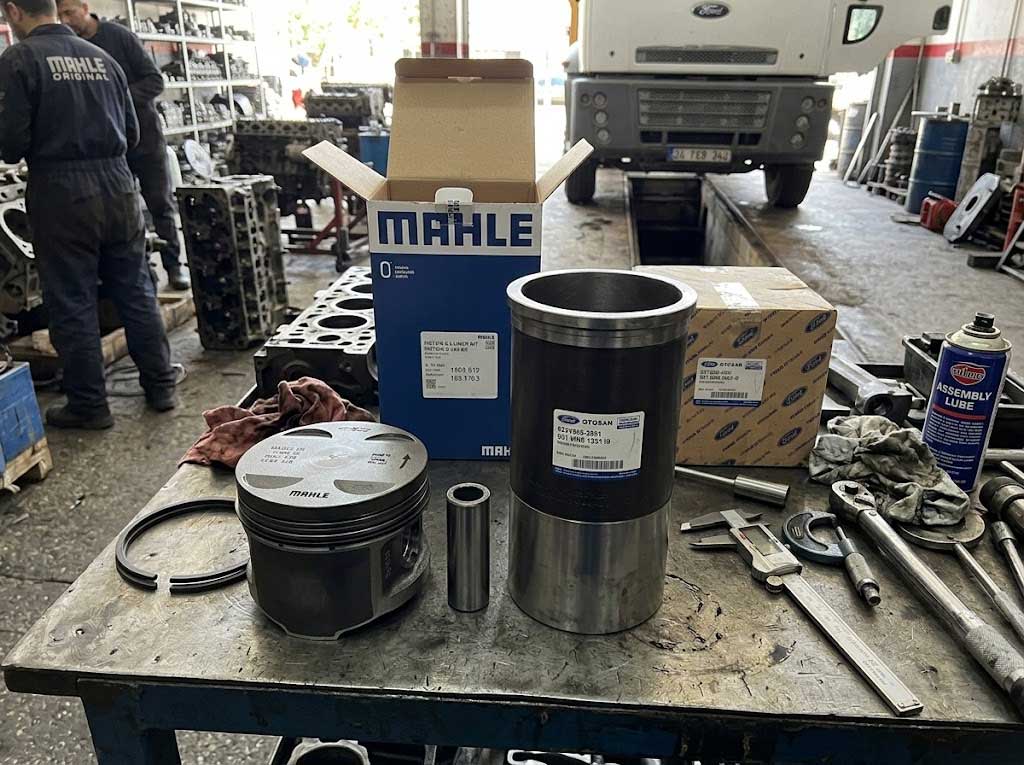
In heavy commercial vehicle fleets, which form the backbone of international haulage, construction-site earthmoving and heavy-tonnage domestic freight, the durability and metallurgical quality of the lower-engine components that make up the heart of the engine are the most basic determinants of commercial success. Ford Cargo and heavy-duty series vehicles, which cover millions of kilometres from Turkish highways to the toughest motorway routes in Europe, are equipped with Ecotorq engine technology to meet high torque and power requirements. In engine blocks working under heavy loads in particular, the piston and cylinder liner combination is directly exposed to extreme temperatures, high combustion pressures and mechanical friction cycles. In engine overhauls of heavy-duty tractor units such as the Ford 4142, the Mahle + Ford Otosan Piston Set, which combines the engineering of Mahle, the world-leading piston manufacturer, with original Ford Otosan cylinder liner quality, offers a flawless power match that extends engine life beyond factory standards. Wrong part selection or poor-quality aftermarket piston combinations cause costly failures that lead to piston burn-through, ring breakage, increased oil consumption and, within a short time, a complete engine rebuild.
Ford Ecotorq Engine Architecture and the Thermal Stresses of the Heavy Duty 4142 Series in Tough Construction-Site Conditions
Ford Cargo 4142 series heavy commercial vehicles are massive machines designed to deliver uninterrupted power especially in construction earthmoving, gravel quarries, ready-mix concrete transport and demanding on-site ground conditions. The Ecotorq engines at the heart of these vehicles create enormous combustion pressures in the cylinder thanks to high-pressure direct injection systems and powerful turbocharger feeds. When the driver climbs long, steep ramps at full throttle under load, temperatures inside the engine block rise to extreme levels and the piston crowns are subjected to extreme thermal expansion. The microsecond-scale explosions in the combustion chamber place tonnes of dynamic force on the piston crown surface.
While converting this explosion energy in the combustion chamber into downward mechanical motion, the piston must be matched by a cylinder liner that continuously resists wall friction. Piston and liner sets with insufficient alloying or defective heat treatment wear quickly under this intense thermomechanical stress, paving the way for compression leakage and engine oil seeping into the combustion chamber. If heat distribution inside the cylinder cannot be kept uniform, local seizures and fine scoring occur on the piston skirts and completely upset the operating balance of the lower-engine group.
Mahle Piston Technology, Special Aluminium Alloys and the Advantages of Graphite-Coated Skirts
Mahle, a global reference point when it comes to engine internals and thermal management systems in the automotive industry, uses high-strength special aluminium-silicon alloys in piston manufacturing. Mahle Ford 4142 pistons are produced with advanced casting and forging technologies and have thermal stability that does not lose strength even at high temperatures. The special Grafal coatings applied to the piston skirt surfaces minimise metal-to-metal friction between the cylinder liner and the piston at initial start-up and during the critical dry-running periods when lubrication has not yet reached ideal pressure.
The cast cooling galleries located just below the piston crown prevent the piston top from overheating through the circulation of cooling oil sprayed by the engine oil pump, and completely eliminate the risk of thermal cracking. The ring grooves, machined with millimetre precision, and the high-alloy Niresist cast ring carriers used in the first compression ring groove prevent the rings from developing even micro-level clearance in their seat. These superior engineering details eliminate the engine's oil-burning problem while maintaining the compression ratio, contributing directly to fuel economy.
The Plateau Honing Structure of the Original Ford Otosan Cylinder Liner and Its Perfect Match with the Piston Ring Architecture
The other critical component that fully reveals the high performance offered by Mahle pistons and maximises engine life is the original Ford Otosan cylinder liner. Cylinder liners are special cast-iron sleeves fitted into the engine block with precise tolerances, in which the piston rings move with high-frequency friction. The original liners produced to Ford Otosan engineering standards retain engine oil around the rings thanks to the special plateau honing (cross-hatch oil channel) roughness of their surfaces, forming an unbroken protective oil film.
Combining a Mahle piston with an original Ford Otosan cylinder liner allows two different metallurgical structures to work together with a perfectly matched expansion coefficient. The heat-induced ovality and distortion problems frequently seen in poor-quality aftermarket liners disturb the ideal working clearance between piston and liner as the engine warms up and let combustion gases escape into the crankcase. Original Ford Otosan liners, on the other hand, keep their cylindrical geometry even in extreme temperature changes, guaranteeing that the piston rings seat fully on the surface and that wear is kept close to zero.
Clear Physical and Mechanical Symptoms of Piston and Cylinder Liner Wear in the Engine
The technical symptoms that show it is time for an engine overhaul or that the lower-engine group has reached the end of its life give clear signals to the driver and the maintenance team. When engine oil seeps into the combustion chamber because of worn piston rings or cylinder liner walls, it causes constant, heavy blue smoke from the exhaust pipe. At the same time, piston skirt wear and widened ring gaps allow combustion pressure to escape down the cylinder bore into the crankcase, which shows itself as heavy smoke and pressurised air blowing out when the dipstick is pulled or the oil filler cap is opened.
A drop in cylinder compression pressure directly and negatively affects engine torque output; this causes the vehicle to lose pulling power noticeably on slopes, throttle response to weaken and fuel consumption to rise significantly. When the wear clearance between piston and liner exceeds the manufacturer's tolerance limits, a metallic knocking sound that is especially noticeable when the engine is cold and increases on climbs can be heard from the engine block.
Professional Engine Overhaul Processes, Liner Fitting Tolerances and Precision Assembly Discipline
When replacing Mahle pistons and original Ford Otosan cylinder liners in the overhaul of Ford 4142 engines, top-level machining and assembly discipline must be applied. In the first stage, the engine block must be stripped and cleaned in special chemical washing baths, and the liner seats must be checked with precision dial gauges for any micron-level cracks or axis misalignment. When the cylinder liners are installed, the protrusion height of the liner's upper flange above the engine block surface must be adjusted with precise shims according to the tolerance values in the manufacturer's catalogues; an incorrect flange height paves the way for a blown cylinder head gasket.
Before the Mahle pistons are fitted into the liners, their skirt diameters must be checked with a micrometer and the clearances inside the liners must be confirmed as perfect. When fitting the piston rings, the end gaps of the compression and oil rings must be measured with a feeler gauge, and the ring gaps must be positioned at 120-degree angles so that they do not face each other during assembly. Tightening the connecting rod bolts with a torque wrench to the angular tightening values specified by the manufacturer, and lubricating all surfaces with fresh engine oil during assembly, completely prevents wear at the very first start-up.
Total Cost of Ownership in Commercial Fleets and Mesay Otomotiv Spare Parts Solutions
Because the cost of a complete engine overhaul in heavy commercial vehicle fleets and the commercial losses incurred for each day a vehicle is off the road are extremely high, the quality of the lower-engine parts used directly protects the operating budget. Choosing the Mahle piston and original Ford Otosan cylinder liner combination for Ford 4142 vehicles that work non-stop in earthmoving and heavy haulage ensures that the engine keeps its factory power, torque and efficiency values for many years. Although poor-quality aftermarket products may look like a short-term cost advantage, they cause damage many times greater through disasters such as piston seizure or liner scoring that develop within a short time.
With our decades of technical experience in engines, gearboxes, differentials and driveline components for heavy commercial vehicles and our strong stock infrastructure, we supply the logistics sector with original Mahle piston sets, Ford Otosan cylinder liners, main and big-end bearing sets and engine overhaul kits for the Ford Cargo Ecotorq series in particular, as well as for the MAN, Mercedes-Benz, Scania, Volvo, Iveco and Renault groups. With our wide product range and fast logistics network, we continue to be your most reliable business partner in keeping your fleet's engine power at its peak, eliminating oil-consumption and blow-by problems at the root, and guaranteeing uninterrupted performance of your vehicles on the road.
