
Sintered (Bronze) vs Organic Clutch Linings in Heavy-Duty Vehicles: Key Differences
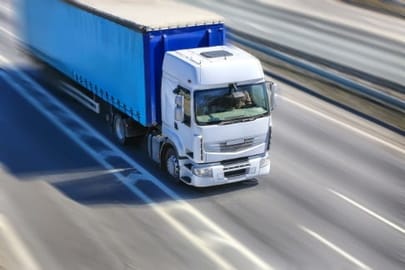
The ability of international haulage operations, construction-site earthmoving and fleets of heavy commercial vehicles carrying tonnes of cargo to transmit power without interruption, even in the harshest road conditions, depends directly on the quality of the clutch system and the right choice of clutch lining. In the drivelines of leading heavy-vehicle brands such as Mercedes-Benz, Ford F-Max, Scania, Volvo, MAN, Iveco and Renault, which cover millions of kilometres from Turkish highways to the hilly motorways of Europe, the high torque produced by the engine is transmitted to the gearbox through the clutch pressure plate and the lining. Lifting huge tonnages, sudden load surges at take-off and intensive gear changes on mountain roads expose the lining surfaces to extreme heat and mechanical friction. At this point, choosing between conventional organic clutch linings and high-strength sintered (bronze) clutch linings, whichever best suits the vehicle's application, is a vital engineering decision. A wrong lining choice is a critical cause of failure: it leads to clutch slip, a burnt flywheel, a lining that strips away within a short time and leaves the truck stranded, and operating costs that multiply.
Structure, Properties and Applications of Organic Clutch Linings
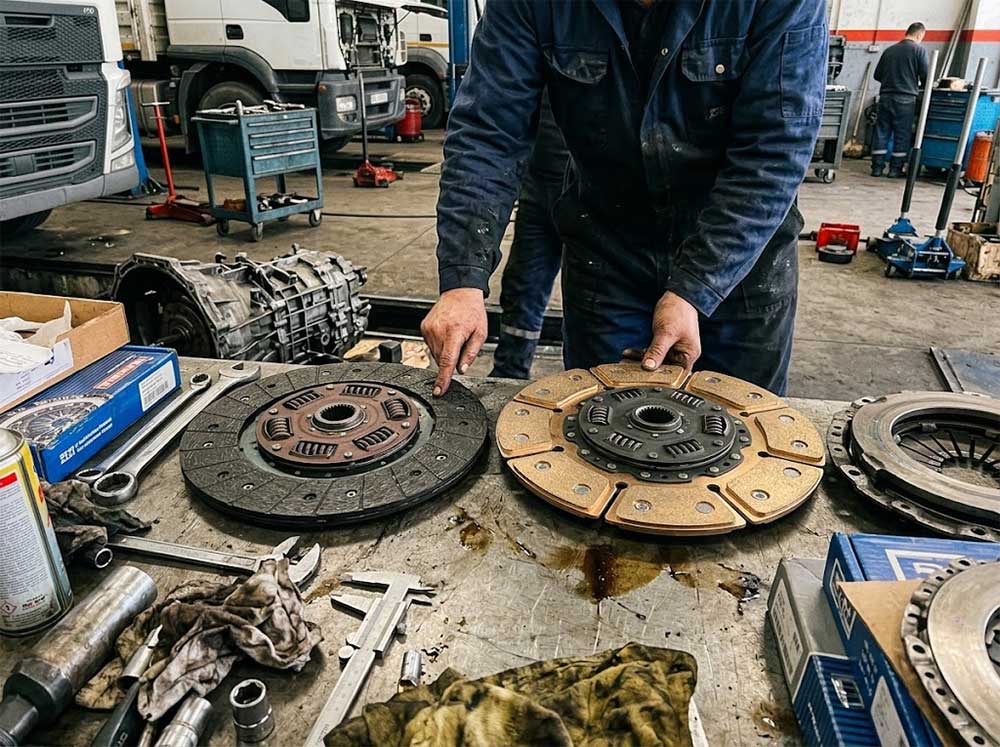
Organic clutch linings have long been the standard from passenger vehicles to heavy-duty trucks. They are composite friction elements made by pressing resin, elastomers, glass fibre, aramid fibres (Kevlar) and soft fillers that raise the friction coefficient under high heat and pressure. The most distinctive technical feature of organic linings is their smooth take-off characteristic and the soft engagement feel they give the clutch pedal. In urban distribution trucks, buses and logistics operations with frequent stop-and-go driving, this structure increases driver comfort while absorbing the sudden shock loads transmitted to the gearbox gears.
However, organic linings have metallurgical limits in terms of high-temperature resistance. When overheated above 350-400 degrees Celsius, the organic resins inside undergo thermal degradation (carbonisation) and form a glazed layer; this abruptly lowers the lining's friction coefficient, causing the clutch to slip and torque transmission efficiency to drop to zero. For this reason, organic linings carry a risk of burning out quickly in heavy-tonnage tipper trucks or in international tractor units that climb mountains continuously.
Structure of Sintered (Bronze) Clutch Linings and Their Heavy-Duty Advantages
Sintered clutch linings (commonly known as bronze linings) are high-strength metallurgical discs produced by compressing metal powders such as copper, bronze, iron and graphite in moulds under extremely high pressure and then sintering (fusing) them in protective-atmosphere furnaces just below their melting point. This technology allows the lining surface to withstand extreme temperatures of 800-1000 degrees Celsius without any deformation. The friction coefficient of sintered linings is much higher and more stable than that of organic linings; this allows a truck carrying tonnes of load to pull away even on steep ramps without judder or slip.
Sintered bronze linings are an absolute necessity in vehicles that work constantly under extreme load and in dusty, muddy, demanding site conditions, such as earthmoving trucks, quarry vehicles, forestry trucks and heavy-haulage tractor units. Thanks to their metallic structure, these linings quickly regain their friction properties even after exposure to water and oil, and they show outstanding resistance to cracking and crumbling under intense heat cycles.
Key Technical and Driving Differences Between Sintered and Organic Linings
To make the right decision in heavy-vehicle operations, the technical and operational differences between the two lining types need to be examined clearly:
- Friction Coefficient and Torque Capacity: Sintered linings have a high torque-carrying capacity, while organic linings are optimised for lower torque limits. Under extreme load the sintered lining locks up and transmits 100% of the torque, whereas the organic lining tends to slip when it heats up.
- Heat Dissipation and Thermal Resistance: While organic linings burn and glaze at high temperatures, sintered linings made of metal alloys quickly conduct heat to the flywheel and pressure plate and resist thermal shock.
- Engagement Characteristics and Driver Comfort: Thanks to their flexible structure, organic linings provide gradual, smooth take-off. Sintered linings, because of their hard metallic structure, may cause slight shuddering (vibration) at take-off, which requires the driver to be more precise with the clutch pedal.
- Flywheel and Pressure Plate Wear Rate: The metallic surface of sintered linings can cause somewhat more mechanical wear on the mating surfaces (flywheel and pressure plate) than organic linings; therefore flywheel surface quality is critical when using sintered linings.
Destructive Effects of Choosing the Wrong Lining on the Gearbox and Flywheel
In heavy-vehicle operations, choosing a lining that does not suit the vehicle's working character triggers costly failures within a short time. For example, fitting an organic lining for comfort to a truck that works continuously on an earthmoving site carrying tonnes of sand and rubble will cause the lining to burn up on the first steep ramp, be destroyed within minutes and leave the vehicle stranded. A vehicle whose lining has burnt and stripped cannot complete its trip, and the high heat also makes the engine flywheel and the clutch pressure plate unusable.
Conversely, fitting a sintered lining to a tractor unit that does international long-haul work and covers thousands of kilometres mostly on motorways at steady revs leads to unnecessary mechanical harshness, reduced driver comfort in stop-and-go traffic and premature wear of the gearbox shock-absorbing components. Choosing a lining suited to the intended use is therefore the most fundamental factor in directly optimising operating costs.
Professional Replacement, Flywheel Grinding and Fitting Discipline
Replacing a clutch lining is not a simple mechanical job of removing the old lining and fitting a new one. In sintered bronze lining replacements in particular, the following professional rules must be followed meticulously:
- Flywheel Surface Inspection and Grinding: An engine flywheel that has been scored by the friction of the old lining or has developed heat cracks must be precisely ground on a lathe or, if necessary, replaced. A new sintered lining fitted on a warped or heat-spotted flywheel quickly loses surface contact, judders and slips.
- Renewing the Pressure Plate and Bearing: Because the diaphragm springs of the clutch pressure plate will have fatigued under load, the pressure plate, release bearing and pilot bush must always be renewed together with the lining.
- Centring and Alignment: During installation, a special centring tool must be used so that the lining sits exactly on the axis; otherwise the gearbox input shaft is strained and the gearbox front bearing is damaged.
The Right Lining Strategy in Fleets and Mesay Otomotiv Solutions
To eliminate the labour losses and high parts costs caused by clutch failures in heavy commercial vehicle fleets, route analyses of vehicles should be carried out; sintered bronze linings should definitely be preferred for earthmoving and construction-site groups, and high-quality organic linings for long-haul logistics groups. In terms of parts quality, durable components meeting original equipment (OEM) standards should be used instead of cheap aftermarket products.
With our decades of technical experience in gearboxes, differentials, engines and driveline components for heavy commercial vehicles and our strong stock infrastructure, we supply the logistics sector with original sintered (bronze) clutch linings, organic lining sets, clutch pressure plates and bearings for all heavy-vehicle groups such as MAN, Mercedes-Benz, Scania, Volvo, Ford Cargo, Iveco and Renault. With our wide product range and fast logistics network, we continue to be your most reliable business partner in keeping your fleet's power transmission efficiency at its peak, eliminating clutch slip and burn-out problems at the root, and guaranteeing uninterrupted performance of your vehicles on the road.
