


Power Steering Pump Whine and Stiff Steering in Trucks and Tractor Units: Causes and Fixes
In the heavy commercial vehicle sector, safe and uninterrupted international logistics, intercity freight, earthmoving and heavy-tonnage haulage depend directly on a vehicle's maneuverability and on a steering system that works flawlessly. In trucks and tractor units hauling trailers weighing many tonnes, one of the most critical components is the hydraulic power steering pump, which uses hydraulic assistance to carry even the smallest force applied by the driver on the steering wheel to the road wheels. Running in sync with engine speed, these high-pressure pumps deliver the hydraulic flow and pressure the steering box needs, so that huge tyres can be turned effortlessly even on the hardest surfaces. However, long working hours, heavy site maneuvering and neglected hydraulic oil maintenance cause chronic failures in steering systems from time to time. Power steering pump whine (a droning or whistling noise), together with a sudden stiffening of the steering that is felt at the same time, is at the top of these failures and is a critical mechanical warning that endangers driving safety and paves the way for complete pump seizure.
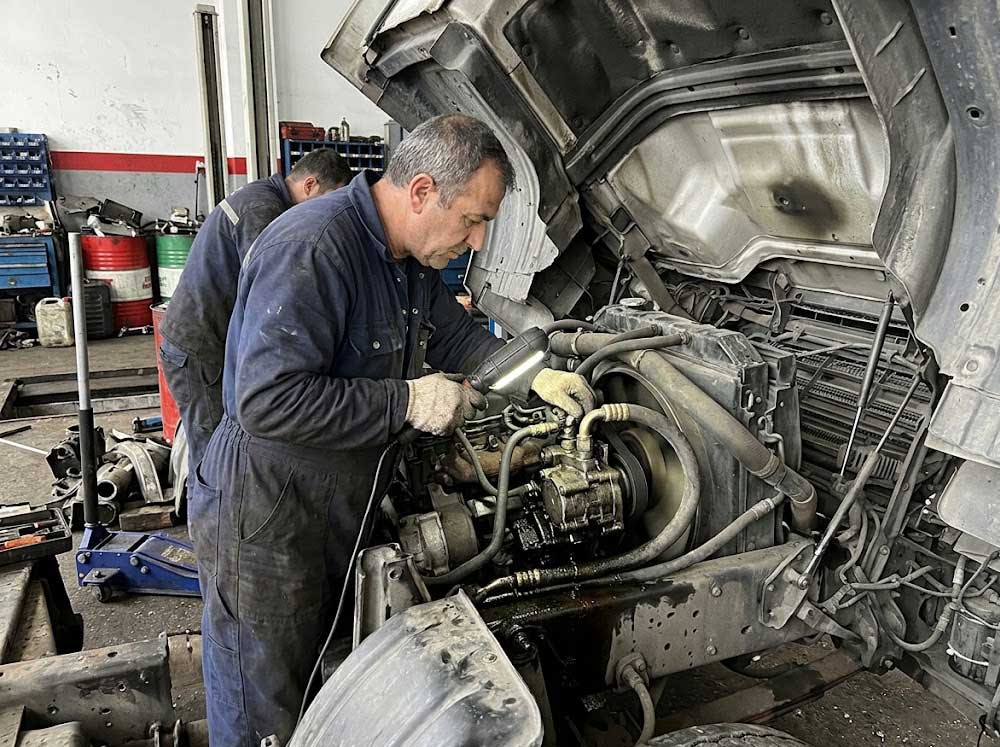
How the Hydraulic Steering Pump Works and Why It Matters in Heavy Vehicle Systems
Heavy vehicle hydraulic steering systems are closed-circuit hydromechanical networks made up of a hydraulic oil reservoir (tank), a high-pressure hydraulic steering pump, the steering box (gearbox), hydraulic hoses and cooler lines. As soon as the engine starts, the steering pump, which takes its drive from a belt, a gear drive or a shaft connection, draws hydraulic oil from the reservoir, converts it into high pressure and sends it to the steering box. When the driver turns the wheel left or right, the hydraulic valves open and the pressurized oil assists the piston inside the steering gearbox, allowing the wheels to turn with very little physical effort. In trucks and tractor units, these hydraulic pumps have to work at far higher pressures (bar) and under enormous axial loads than in ordinary passenger cars. For this reason even the smallest oil shortage, air bubble formation or mechanical wear changes the pump's behavior and shows up as whining noises and stiffening reactions.
Why Does the Steering Pump Whine? The Mechanical Causes Behind the Noise
A droning, whistling or moaning noise from the steering pump is the clearest acoustic evidence that the pump is under mechanical strain and cannot lubricate itself properly. The main technical factors that cause pump whine in heavy vehicles are as follows:
- Air in the System (Cavitation): If the hydraulic oil level drops, the suction hose is loose or air gets into the reservoir, the vanes inside the pump start compressing air instead of oil. This phenomenon, called cavitation, causes microscopic implosions inside the pump and a characteristic droning noise.
- Degraded Hydraulic Oil Quality and Clogged Filter: Hydraulic oil that has not been changed for hundreds of thousands of kilometres loses its properties, burns and no longer resists flow properly. A clogged return filter in the reservoir prevents the pump from drawing enough oil, so the pump runs under vacuum and starts to whine.
- Wear of the Vanes and Rotor Inside the Pump: When the rotor, ring and vanes (blades) turning inside the pump wear out through excessive friction, pressure output falls and a metallic droning sound is transmitted into the cab.
What Causes Stiff Steering? The Chronic Link Between Pump Whine and Heavy Steering
The whine from the steering pump usually continues with a sudden stiffening of the steering within a short time, or the two appear together. When the pump cannot generate enough hydraulic pressure, the steering box loses its hydraulic assistance; the driver's arms tense up as if forcing a vehicle with no power assistance (manual steering) while turning the wheel of a truck weighing many tonnes. The main causes behind the stiffening are as follows:
- Stuck Pressure Regulator Valve (Relief Valve): If the pressure limiting valve on the pump sticks in the open position because of carbon deposits or metal particles, the pressure produced escapes directly back to the reservoir and no pressure reaches the steering box.
- Broken Pump Shaft or Gear: Excessive strain or running dry from lack of oil can shear the pump shaft or strip the drive gear; in that case the pump turns but delivers no oil at all, and the steering becomes completely rock hard.
- Internal Sealing Failures in the Steering Box: Even if the pump is healthy, torn seals inside the steering box can let pressurized oil leak between the piston chambers and make the steering stiff.
Repair Steps and Professional Repair Processes to Fix the Fault
A heavy vehicle that comes into the workshop with a complaint of steering pump whine and stiff steering should be handled with a thorough engineering approach rather than temporary fixes. The professional repair steps applied are as follows:
- Hydraulic Oil Level and Quality Check: The oil level in the system is checked; if the oil has turned black, smells burnt or is foamy, the entire system is drained completely and cleaned.
- Suction Line and Clamp Inspection: Suction hoses, fittings and clamps that could let air into the pump are checked, and sealing is secured.
- Pump Overhaul or Replacement with a New Unit: Steering pumps with internal mechanical wear, broken vanes or a faulty pressure valve are removed and overhauled with original repair kits, or replaced with a new pump of original equipment (OEM) standard.
- System Flushing and Bleeding: After the new pump is installed, the hydraulic system is flushed with special solutions to remove metal shavings. Once fresh, manufacturer-approved hydraulic oil has been filled, the steering is turned full lock left and right to expel all the air from the system (bleeding).
Hydraulic System Maintenance in Heavy Vehicle Fleets and the Mesay Otomotiv Guarantee
In logistics operations, sudden stiffening of the steering is such a critical risk that it can lead to loss of control in bends and very dangerous road accidents. To prevent such emergencies in fleets, hydraulic steering oil and filters must be replaced regularly during periodic maintenance. Choosing low-quality aftermarket hydraulic pumps, on the other hand, causes the same fault to return quickly and damages the steering box as well.
With our decades of technical experience in heavy commercial vehicle gearboxes, differentials, steering and driveline components and our strong stock infrastructure, we supply the industry with original hydraulic steering pumps, steering box repair kits and high-performance hydraulic components for all leading heavy vehicle groups such as MAN, Mercedes-Benz, Scania, Volvo, Ford Cargo, Iveco and Renault. To make sure your fleet maneuvers safely on the road, does not lose time to steering faults and keeps driving safety at the highest level, we remain your most reliable partner with our wide product range and fast logistics network.
