


Why Do Brake Pads Wear Out Prematurely? Reasons for Rapid Brake Pad Wear in Heavy Vehicles
One of the most important components for safe driving in heavy-duty vehicles is the braking system. Especially in high-weight vehicles such as trucks, lorries, tractor units and buses, brake pads are among the critical components that allow the vehicle to slow down and stop safely.
However, one of the problems many drivers encounter is that the brake pads wear out sooner than expected. Newly replaced pads wearing out after a short distance both increases maintenance costs and may indicate another problem in the braking system.
Brake pad wear may vary depending on operating conditions. Load, driving style, road conditions and the general condition of the braking system directly affect pad service life.
So, why do brake pads wear out early? Why do truck brake pads wear quickly? Which braking system faults cause rapid pad wear? How can brake pad life be extended?
In this article, causes of brake pad wear in heavy-duty vehicles, why brake pads wear out quickly, factors that reduce brake pad life, braking system faults and what should be done to make brake pads last longer are examined in detail.
What Is a Brake Pad and What Does It Do?
A brake pad is a friction component that allows the vehicle to slow down.
During braking, the pads press against the disc or drum surface, converting kinetic energy into heat energy and reducing the vehicle's speed.
The braking system in heavy-duty vehicles is exposed to much greater forces because:
- The vehicle is heavier.
- The carried load affects braking distance.
- The braking system operates more intensively on long descents.
- Vehicles that travel continuously have longer operating periods.
For this reason, regular inspection of heavy-duty vehicle brake pads is extremely important.
Why Do Brake Pads Wear Out Early?
Frequent Hard Braking Shortens Brake Pad Life
One of the most common causes of early brake pad wear is aggressive braking.
Frequent and sudden braking creates more friction on the pad surface. This generates excessive heat and causes the pads to wear more quickly.
Especially:
- Hard braking at the last moment,
- Constant acceleration followed by sudden deceleration,
- Frequent braking in traffic
significantly reduce brake pad life.
More controlled and anticipatory driving in heavy-duty vehicles allows braking components to be used for longer.
Carrying Excessive Loads Wears Out Brake Pads Faster
Trucks and lorries operate with high tonnages. However, loading the vehicle beyond its carrying capacity places additional pressure on the braking system.
When the vehicle is overloaded:
- The vehicle becomes more difficult to slow down.
- The brakes must dissipate more energy.
- The pads reach higher temperatures.
- Wear accelerates.
Especially in vehicles that continuously carry heavy loads, brake pad replacement intervals may be shorter than under normal use.
A Seized Brake Caliper Causes Early Brake Pad Wear
The brake caliper is an important component that moves the pad towards the disc.
If problems inside the caliper cause the pad to remain in constant contact with the disc:
- The brake does not release.
- Friction continues.
- The pad wears continuously.
- The disc overheats.
In this case, the driver may sometimes notice symptoms such as:
- The vehicle pulling to one side,
- Excessive heat around the wheel rim,
- A burning smell,
- Increased fuel consumption
among other signs.
Brake Disc or Drum Problems Increase Brake Pad Wear
For the pad to operate correctly, the surface it contacts must also be in good condition.
Problems in the disc or drum such as:
- Warping,
- Scratches,
- Surface deterioration,
- Excessive wear
may cause the pad to wear faster than normal.
Using a newly fitted pad with an old and damaged disc reduces pad life and lowers braking performance.
Using Poor-Quality Brake Pads May Cause Premature Wear
The manufacturing quality of a brake pad plays a major role in its service life.
With poor-quality pads or pads unsuitable for the vehicle:
- Friction performance may decrease.
- Wear may accelerate.
- Heat resistance may decrease.
- Braking distance may increase.
Brake pads used in heavy-duty vehicles must be suitable for high-temperature and heavy-load conditions.
Although unsuitable parts may offer a short-term cost advantage, they may cause greater expenses in the long term.
Not Using the Retarder Increases Brake Pad Wear
The retarder system found in heavy-duty vehicles is used to reduce the load on the braking system, especially on long descents.
When the retarder is not used:
- The main brakes operate more frequently.
- The pads become hotter.
- Wear accelerates.
Especially on mountain roads and long descents, using auxiliary braking systems such as the retarder instead of continuously applying the service brakes may extend brake pad life.
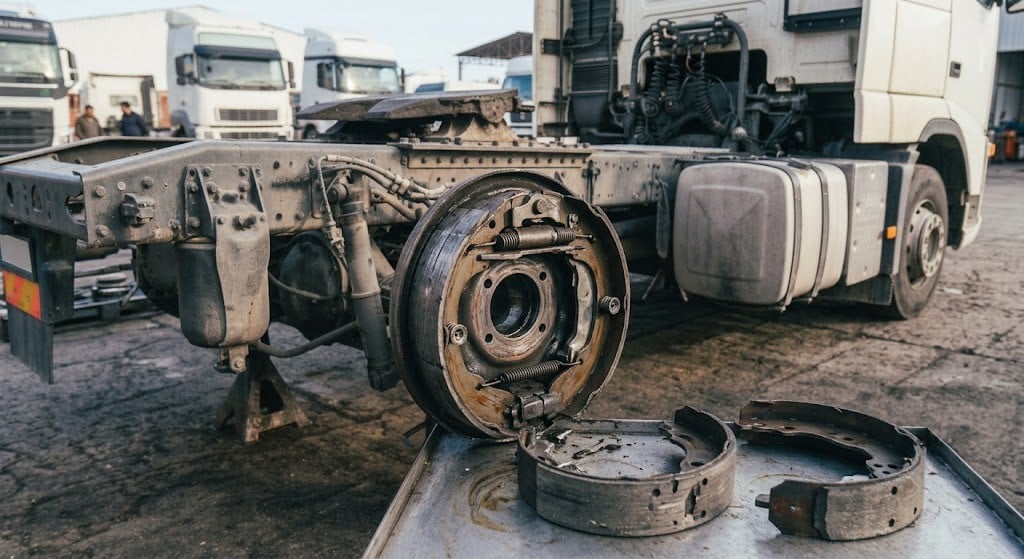
Braking System Adjustment Problems May Wear Out the Pads
Correct adjustment of the braking system is extremely important in heavy-duty vehicles.
Incorrect adjustments in the braking mechanism may cause:
- Some wheels to brake more strongly,
- Uneven wear,
- The pad to wear out on one side
and similar problems.
Especially in air braking systems, pressure values and braking mechanisms should be checked regularly.
Suspension and Wheel Problems May Affect Brake Wear
The braking system should not be evaluated on its own.
Problems in the wheel bearing, suspension or axle system may affect how braking components operate.
For example:
- Wheel play,
- Bearing wear,
- Axle alignment problems
may cause uneven brake pad wear.
Does Frequent Driving on Slopes Reduce Brake Pad Life?
Yes. Long descents are particularly demanding for the braking system in heavy-duty vehicles.
When the brakes are used for a long time:
- Pad temperature rises.
- The friction material wears more quickly.
- Braking performance may decrease.
For this reason, using a lower gear and auxiliary braking systems on long descents is important.
How Can Early Brake Pad Wear Be Identified?
There are several symptoms indicating that the service life of the brake pads is decreasing.
These may include:
- Noise during braking,
- Longer braking distance,
- A different feeling in the brake pedal,
- Excessive heat in the wheel rims,
- Vibration during braking,
- The brake pad warning system activating
and similar signs.
When these symptoms appear, not only the brake pads but the entire braking system should be inspected.
What Should Be Considered When Replacing Brake Pads?
Simply replacing the old pad with a new one is not always sufficient.
During brake pad replacement:
- The condition of the disc or drum should be checked.
- Caliper movement should be inspected.
- The braking system should be cleaned.
- Required adjustments should be made.
- Brake pads of suitable quality should be used.
Otherwise, the newly fitted pad may also wear out within a short time.
How Can Brake Pad Life Be Extended?
Correct driving habits are important for using brake pads for longer.
Key points to consider include:
- Avoid sudden and unnecessary hard braking.
- Maintain a safe following distance.
- Use the retarder on long descents.
- Do not load the vehicle beyond its capacity.
- Have the braking system inspected regularly.
- Choose high-quality brake pads.
- Do not neglect disc and drum inspections.
Correct use and regular maintenance reduce braking costs while improving driving safety.
Frequently Asked Questions
Why do truck brake pads wear out quickly?
The main causes of rapid truck brake pad wear are excessive loads, hard braking, brake caliper problems, disc issues and lack of maintenance.
Why does a newly replaced brake pad wear out immediately?
A newly fitted pad wearing out within a short time is generally caused by another problem in the braking system, a poor-quality component or incorrect use.
At what mileage should brake pads be replaced?
Brake pad service life varies depending on vehicle load, driving style, road conditions and the condition of the braking system.
Does using the retarder protect the brake pads?
Yes. The retarder helps reduce brake pad wear by decreasing the load on the main braking system, especially in heavy-duty vehicles.
What happens if the brake caliper seizes?
When the caliper seizes, the pad may remain in constant contact with the disc. This causes premature wear, excessive heat and braking performance problems.
Should the disc also be replaced when replacing the brake pads?
It depends on the condition of the disc. Using new pads with excessively worn or damaged discs is not appropriate.
Why does a brake pad wear out on one side?
Uneven wear is generally caused by caliper problems, brake adjustment issues, disc faults or wheel alignment problems.
What should be done to extend brake pad life?
Balanced driving, regular maintenance, correct loading and the use of auxiliary braking systems help extend brake pad life.
