


Truck In-Tank Strainer and High-Pressure Fuel Pump Fault Diagnosis Guide
For international transport, logistics operations and heavy-tonnage domestic haulage to continue without interruption, the flawless operation of the fuel supply system, the heart of the engine, is vital. Heavy commercial vehicles such as the Mercedes-Benz Actros, Ford F-Max, Scania, Volvo, MAN, Iveco and Renault, which cover millions of kilometers on routes from Turkish highways to the toughest roads of Europe and the Middle East, are equipped with high-pressure common rail fuel technologies. The backbone of these modern, sensitive injection systems is the fuel supply line extending from the fuel tank to the engine block and the two most critical components of that line: the in-tank strainer (fuel suction strainer) and the high-pressure fuel pump. However, fluctuations in fuel quality and sediment, water and foreign matter accumulating in the tank occasionally cause blockages and pressure drops in the fuel system. A clogged in-tank strainer or mechanical wear in the high-pressure fuel pump is one of the most serious chronic faults, causing the vehicle to lose pulling power, the engine to crank without starting, and the truck to be stranded on the road. In commercial fleet operation this results in both lost time and costly repair losses.
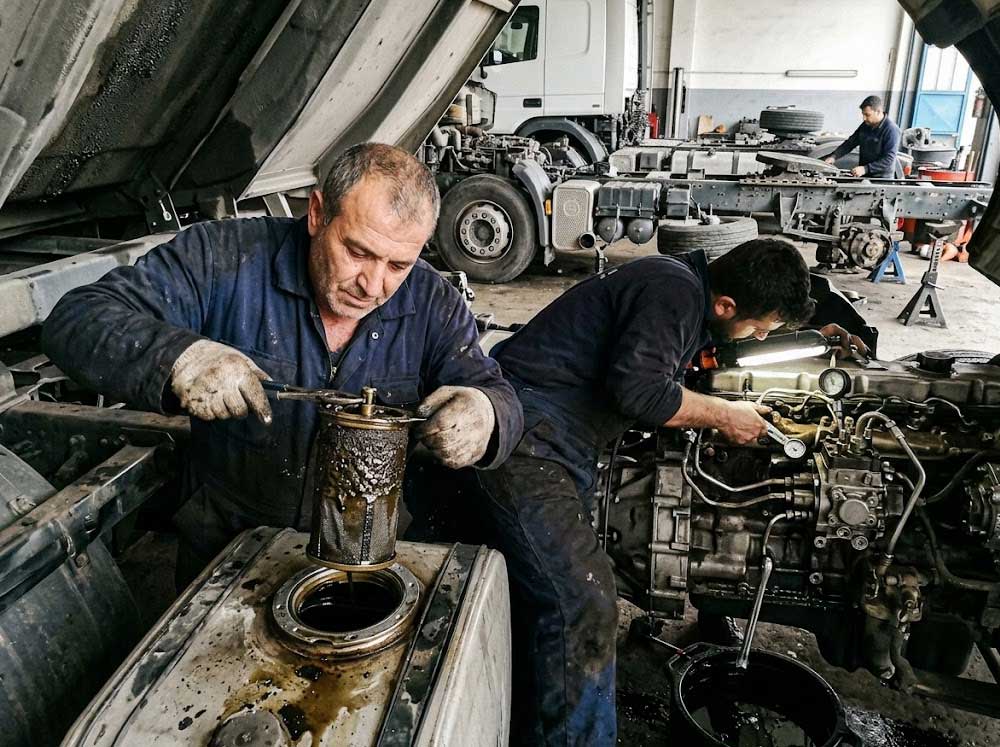
The Critical Role and Location of the In-Tank Strainer in the Fuel Supply System
Located inside the aluminum or steel fuel tanks of heavy commercial vehicles, at the end of the fuel suction pipe, the in-tank strainer (filter element) is the first line of defense of the fuel system. By preventing sediment, rust, dust and biological residue in the diesel obtained at filling stations from reaching the fuel lines and the pre-filter, this strainer ensures that the fuel pump is fed clean fuel. While thousands of liters of fuel circulate in trucks with huge tanks, the sediment that gradually accumulates at the bottom of the tank surrounds the strainer. When the pores of the strainer become clogged, the high-pressure pump can no longer draw the flow rate (fuel quantity) it needs and vacuum begins to build in the system. This starts the first chain reaction: the injectors and the fuel pump are lubricated with insufficient fuel, which paves the way for metallic wear. The strainer is generally made of fine-pore nylon in a plastic cage or metal wire mesh; paraffin deposits in the fuel can completely close these pores and cut off fuel flow.
Working Principle and Delicate Structure of the High-Pressure Fuel Pump
The high-pressure fuel pump (common rail high-pressure pump) is an extremely sensitive hydraulic pump that is mechanically driven according to engine speed and compresses fuel to incredibly high pressure levels of 2000 to 2500 bar before sending it to the rail (fuel distribution manifold). The pistons, camshafts and control valves inside the pump work thanks to the fuel's own lubricating properties. Water in the fuel lowers its viscosity and prevents these micro-precision metal surfaces from being lubricated. A high-pressure pump that cannot draw enough fuel from the tank because of a clogged strainer begins to take in air and creates micro-explosions called cavitation, which start tearing off its own metal particles. These detached metal shavings spread throughout the system and instantly destroy the injectors and fuel regulators. For this reason, the health of the high-pressure pump depends directly on the cleanliness of the supply line and the permeability of the strainer.
The mechanical tolerances inside a fuel pump are at the micron level. Even particles too small to see can scratch these delicate surfaces and cause pressure leaks. The most basic measures for extending the life of this expensive pump are for drivers to choose reliable stations when refueling, to replace water-separating filters on time, and to inspect the in-tank strainer regularly.
Symptoms of a Clogged Fuel Strainer and Fuel Pump Failures
A clogged in-tank strainer or a failing high-pressure fuel pump shows itself to heavy-vehicle drivers in the cab through very clear and worrying symptoms in engine performance:
- Loss of Pulling Power on Hills and Poor Throttle Response: The vehicle runs normally on flat road, but when it begins to climb a grade with a heavy load, the engine suddenly stops responding to the throttle, loses torque, and the engine fault lamp lights up on the digital display.
- Hard Starting in the Morning or in Cold Weather: Because of the clogged strainer or pressure leaks in the pump, the fuel line is constantly exposed to air (air intake at connection points); this causes the vehicle to start only after long cranking, especially on the first start in the morning.
- Sudden Stalling While Driving: The engine suddenly losing power and stalling at high speed or while overtaking is the most dangerous result of the high-pressure pump failing to maintain rail pressure and putting itself into protection.
- Fault Codes (DTC): When connected to a diagnostic device, critical fault codes such as "Fuel Pressure Too Low" (Rail Pressure Low), "Pump Pressure Regulator Fault" or "Fuel Supply Flow Fault" appear on the screen.
Fault Diagnosis Process and Professional Inspection Steps
Correct diagnosis in fuel supply and high-pressure pump faults is critical to avoiding thousands of liras of unnecessary part replacement. The diagnostic steps followed in professional service standards are as follows:
- Low-Pressure and Vacuum Test: First, the condition of the in-tank strainer is checked. The tank is removed and the strainer mesh is examined; if there is sediment or layering, it is cleaned or replaced. The vacuum drawn by the feed pump is measured with a manometer.
- High-Pressure Test and Metal Shaving Inspection: The fuel filter is removed and its interior examined. Bright metal shavings inside the filter are certain proof that the high-pressure pump has worn internally and completely disintegrated.
- Regulator and Sensor Check: The metering control valve on the pump (SCV / ZME) and the rail pressure sensor are monitored dynamically with a diagnostic tester to verify the electrical signals.
Professional Repair, Pump Overhaul and Tank Cleaning
On a heavy vehicle in which a high-pressure pump failure has been identified, replacing only the pump is never enough. Because the metal shavings circulating in the system contaminate all fuel lines, the rail and the injectors, the following comprehensive steps are mandatory during repair: The fuel tank must be removed completely, then freed of bottom sediment with special chemicals and dried. The in-tank strainer must definitely be renewed. The disintegrated high-pressure pump must be overhauled or replaced to original equipment (OEM) standards. The injectors must be taken to the test bench and cleaned or have their tips renewed. All fuel lines and diesel filters must be replaced and the system filled completely with fresh, clean fuel.
Fuel System Maintenance Discipline in Fleets and Mesay Otomotiv Solutions
To eliminate breakdown costs on the road and extend fuel system life in heavy commercial vehicle fleets, low-quality fuel should be avoided and fuel filters must always be replaced with original products at every maintenance interval. In addition, before every winter, the drain plugs at the bottom of the fuel tanks should be opened to discharge accumulated water and sediment.
With our decades of technical experience in heavy commercial vehicle transmissions, differentials, engines and fuel injection systems and our strong stock infrastructure, we supply the logistics sector with original high-pressure fuel pumps, in-tank strainers, fuel filters and injector repair kits for all heavy-vehicle groups such as MAN, Mercedes-Benz, Scania, Volvo, Ford Cargo, Iveco and Renault. To keep your fleet's engine performance at the highest level, prevent the operational disruptions caused by fuel pump failures and safeguard fuel system reliability, we remain your most reliable business partner with our wide product range and fast logistics network.
